
Practical guides · cost
What Affects the Cost of Wiring Repairs?
The visible problem is only the starting point. Learn how diagnosis, circuit extent, access, damaged components and restoration responsibilities shape a wiring repair estimate.
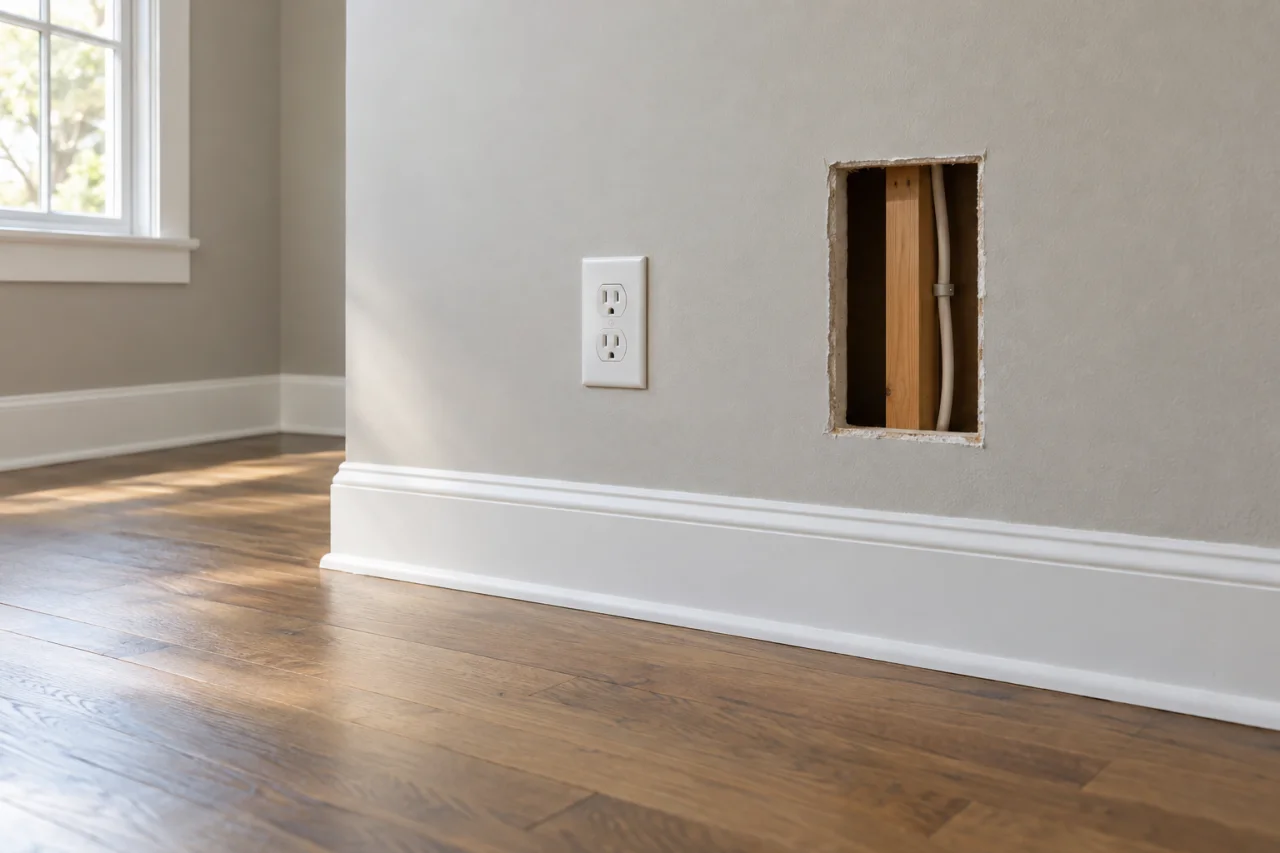
What you’ll learn
- Similar symptoms can lead to different repairs; diagnosis establishes what actually needs attention.
- Circuit extent, conductor compatibility and access through finished surfaces can change the scope.
- Ask for required corrections and optional improvements to be explained separately.
- Confirm permit responsibilities and distinguish electrical completion from drywall and paint restoration.
- Compare written inclusions, assumptions and approval points—not totals alone.
Two outlets stop working in two different homes. The symptoms sound identical, yet one repair proposal may be much more involved than the other. The difference is not necessarily the outlet: it is what must be diagnosed, reached, repaired and restored. For homeowners considering Wiring Repairs, the useful question is not just “What will it cost?” but “What work does this estimate actually include?” This guide explains the scope decisions to discuss before approving a repair.
1. Diagnosis comes before a meaningful repair scope
A dead outlet is a symptom, not a complete diagnosis. CPSC guidance identifies different electrical problems associated with devices, connections, overheating and circuit protection. Two outlets that look alike from the room can therefore lead to different repair recommendations. Replacing the visible device is not necessarily the same job as correcting the fault supplying it. (cpsc.gov)
For a service such as Outlets & Switches, ask whether the proposed amount assumes a device-only problem or includes investigating the circuit. If diagnosis is separate, establish what you are authorizing first and when you will receive the repair options.
Prepare a short symptom history: which locations are affected, whether the problem is constant or intermittent, and what was operating when it occurred. Describe what you already observed rather than deliberately recreating a fault. If breaker trips are part of the problem, our guide to why a circuit breaker keeps tripping offers related background.
2. Circuit extent matters more than the number of dead outlets
The next question is how much of the circuit actually needs attention. An estimate might address one connection, a device and its immediate wiring, or a longer damaged section. Those are different scopes even when the original complaint is identical.
Ask the electrician to distinguish confirmed findings from conditions that remain concealed. Useful questions include: Where does the identified damage begin and end? What supports replacing this section? What would require extending the repair?
Connections also have material-specific requirements. The U.S. Fire Administration explains that splice devices must suit the conductor material and that dissimilar metals cannot be intermixed unless the connector is identified for that purpose. Existing wiring therefore affects more than the length of replacement cable. (apps.usfa.fema.gov)
A house's age alone is not a complete explanation for a whole-home recommendation. When weighing a targeted repair or a broader upgrade, ask for the findings and limitations behind each option.
3. Finished surfaces can change the work involved
Access can change the amount of disturbance involved. A visible cable route in an unfinished space presents a different planning problem from wiring concealed behind a finished wall. Do not assume that an attic or crawlspace provides a usable route simply because it exists.
Ask where access is expected and whether the estimate assumes that the route is clear. If more than one compliant route is possible, compare appearance, disruption and restoration responsibilities—not just the amount of cable.
Future access matters too. USFA training materials explain the accessibility requirement for junctions and splices. A proposed repair should not depend on concealing a junction box behind a permanent finish. Ask how any new junction will remain accessible after restoration. (apps.usfa.fema.gov)
- Ask which existing access points could be used before new openings are proposed.
- Identify finishes you want preserved, such as tile, cabinetry or decorative wall treatments.
- Request an explanation of likely openings and any alternatives before work begins.
- Clarify what happens if the assumed cable route is not usable.
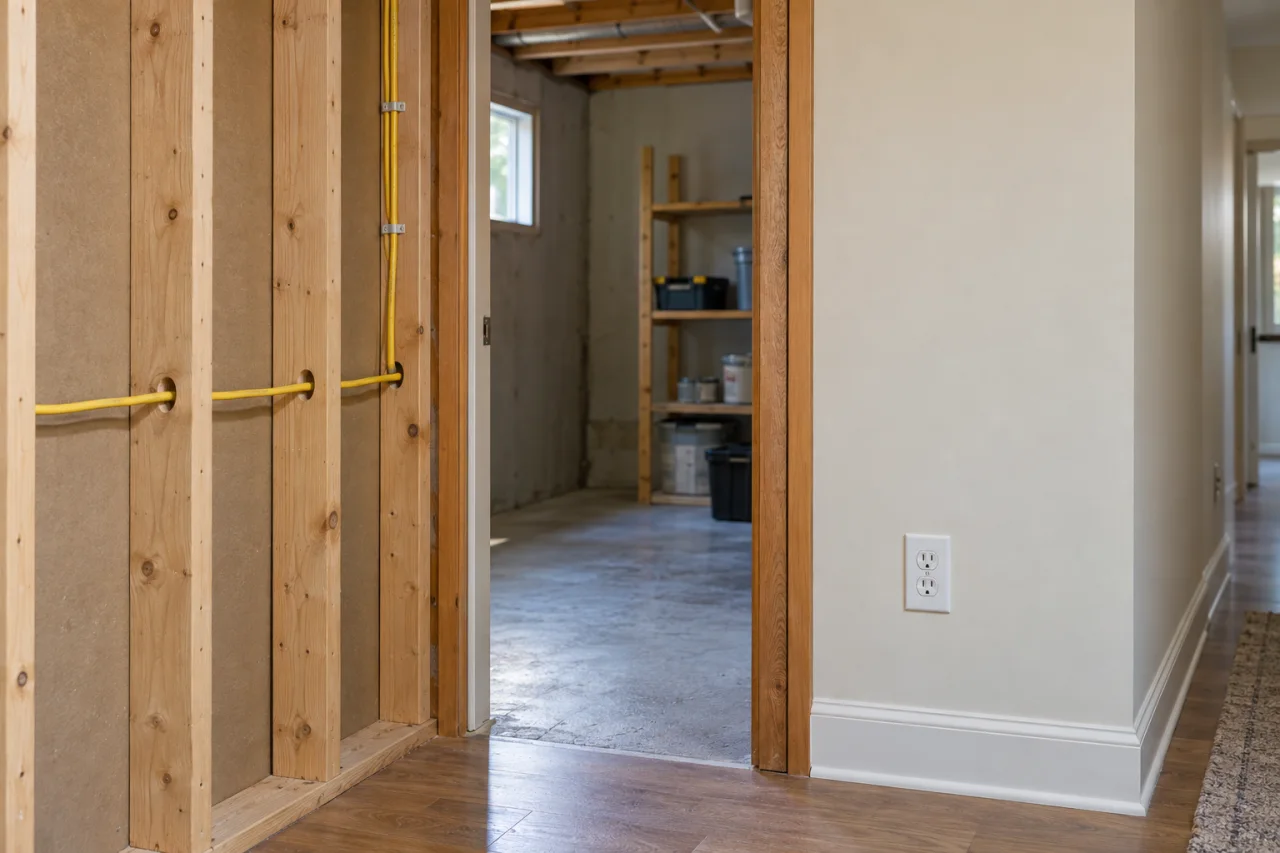
4. Damaged components and required corrections add scope
A cover plate is not the full extent of an electrical assembly. Ask whether the estimate includes only the visible device or also affected conductors, connectors and the enclosure. Where overheating or damaged insulation is involved, request an explanation of what can remain and what requires replacement. CPSC identifies heat discoloration, damaged insulation and unusual odors as warning signs requiring attention. (cpsc.gov)
Required corrections should also be explained individually. If protective equipment is proposed, ask whether it is required for this work, recommended as a separate improvement, or already provided elsewhere. AFCI protection addresses hazardous arcing; it should not be described as a substitute for repairing damaged wiring. ESFI explains that arc faults can arise from damaged, overheated or stressed wiring and devices. (esfi.org)
Keep necessary repairs distinct from optional additions. Electrical Options & Planning can help organize that discussion without turning a repair visit into an undefined upgrade project.
5. Permits and inspections belong in the estimate
For a West End or Moore County property, permit questions should follow the actual work—not the informal label “small repair.” North Carolina law generally requires permits for electrical installation, extension, alteration or general repair, while providing conditional exemptions for certain fixture and device work in one- and two-family dwellings. (ncleg.gov)
The device-replacement exemption includes conditions concerning voltage, amperage, licensed performance and compliance with the applicable code. It is not a blanket exemption for replacing concealed wiring. Ask who will confirm the requirements with the inspection department serving your address, obtain any required permit and coordinate inspections. (ncleg.gov)
An estimate should say whether permit-related items are included or excluded. Where inspection is required, ask when finishes can be closed and what completion documentation you should retain.
6. Separate the electrical repair from putting the room back
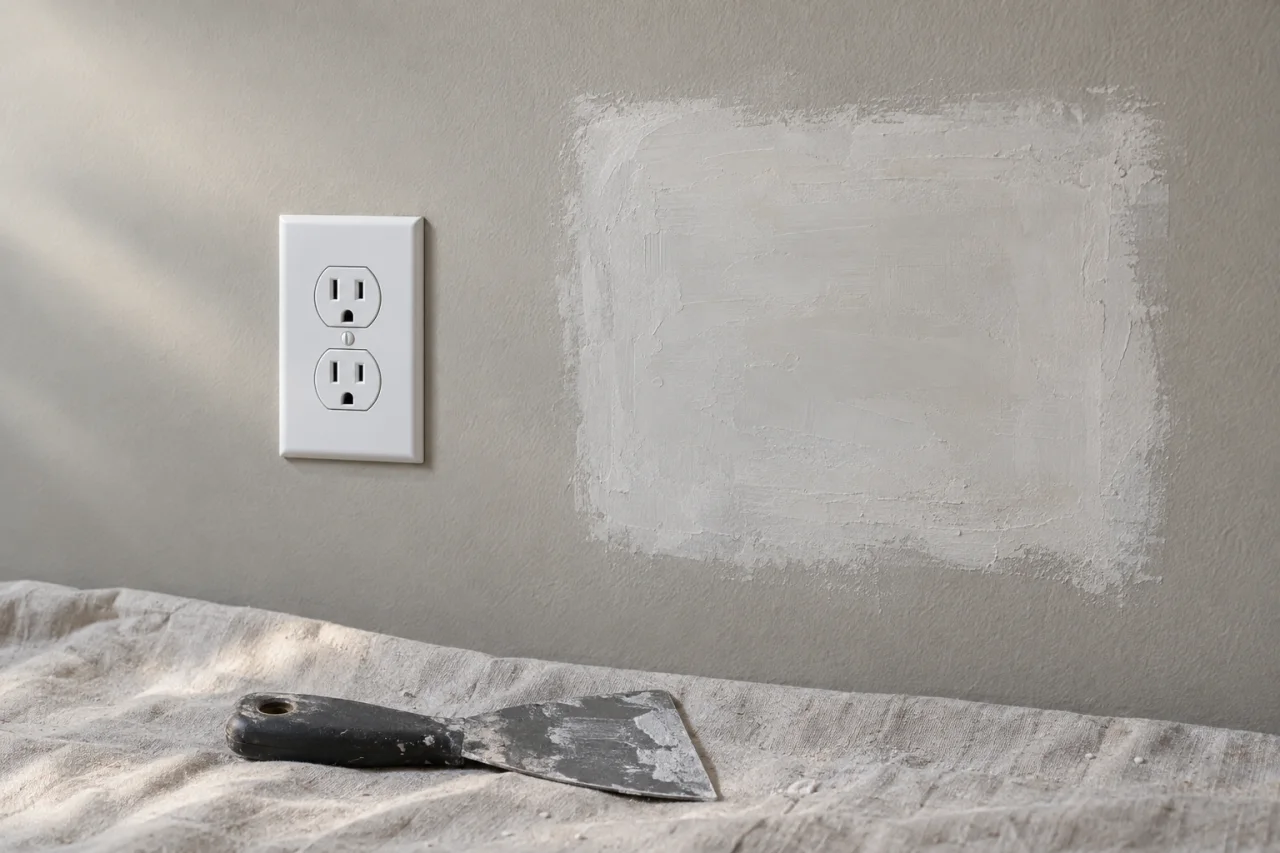
Treat electrical repair and finish restoration as separate lines of discussion. A functioning circuit does not tell you whether drywall patching, texture matching or painting is included. Request that distinction in writing rather than assuming “complete repair” means a finished room.
If opening a wall is likely, ask how the expected disturbance will be described and who handles work outside the electrical scope. An alternate route may preserve one finish while introducing another visible change; discuss that tradeoff before approving it.
The following checklist is useful when comparing proposals. It is a list of questions to resolve, not a statement that every repair requires each task.
- Electrical access: who makes openings and protects the immediate work area?
- Electrical completion: what repair and verification are included?
- Cleanup: who removes electrical debris and removed wall material?
- Wall repair: who patches, sands and restores texture?
- Final finish: are priming, painting and trim work included?
- Coordination: who confirms that the wall can be closed before restoration?
7. Compare inclusions, assumptions and approval points
The most useful comparison is not simply the lowest total. First check whether the proposals describe the same problem and include the same work. A device replacement and a cable repair are not equivalent offers.
Ask how the contractor will handle an unexpected condition. A clear answer should identify when work pauses for discussion, how the additional scope is described and how you authorize it. Avoid approving an open-ended instruction to repair whatever is found without understanding the charging arrangement.
After completion, retain the scope, invoice, any inspection records and recommendations for remaining work. Ask what symptoms should prompt another call. For everyday prevention, USFA recommends avoiding overloaded outlets and replacing outlets that no longer hold plugs snugly. (usfa.fema.gov)
- What fault has been confirmed, and what remains uncertain?
- Is diagnostic work included, separate or limited to an initial assessment?
- Which devices, connections and cable sections are included?
- What access and existing-condition assumptions affect the proposal?
- Which corrections are required, and which improvements are optional?
- How will additional findings be explained and approved?
- What restoration tasks and permit-related items are excluded?
8. Address warning signs before comparing repair options
Cost comparisons should not delay attention to warning signs. CPSC identifies shocks, arcing, overheating, damaged insulation and burning odors as potential hazards. Stop using the affected device and obtain qualified help; do not remove covers or touch wiring to investigate. Never fit a higher-rated breaker simply to stop tripping. (cpsc.gov)
If there is smoke, fire, active arcing, electrical sizzling or buzzing, or an unexplained burning odor, leave the area and call 911 from a safe location. (mass.gov) If someone may have received an electric shock, call 911 or emergency medical help; do not touch anyone who may still be connected to electricity. (cdc.gov)
The Electric Knight offers Wiring Repairs for homes and businesses in West End and Moore County. When discussing a concern, describe the symptoms, affected locations and known access limitations. Then ask for a proposed scope that separates diagnosis, repair, required corrections and restoration. That is a more useful basis for a decision than a price attached only to “an outlet that stopped working.”
Questions & answers
Can a firm repair price be given from a photograph?
A photograph can help explain the visible concern, but it cannot establish the condition of concealed wiring or connections. Ask whether the initial amount covers assessment only, a defined repair, or work based on assumptions that still need confirmation.
Does one damaged outlet mean the whole house needs rewiring?
Not by itself. Ask what findings support the proposed scope and whether the damage is localized or extends farther along the circuit. A broader recommendation should explain the additional conditions it addresses, not rely only on the home's age.
Will every wiring repair require a permit in North Carolina?
No. State law includes conditional exemptions for certain fixture and device repairs or replacements in one- and two-family dwellings. Those exemptions do not cover every wiring repair. Confirm the actual scope with the inspection department responsible for the property. (ncleg.gov)
Is drywall repair included in electrical work?
Do not assume so. Ask separately about opening walls, removing debris, patching, sanding, texture matching, priming and painting. The estimate should identify which tasks are included and who is responsible for the rest.
What should I do if the outlet starts working again?
Intermittent operation does not establish that the cause has been corrected. Record what happened without repeatedly recreating it, and arrange an assessment. Avoid using a device that has produced shocks, overheating or arcing. (cpsc.gov) If arcing, smoke, fire or an unexplained burning odor is present, leave the area and call 911 from a safe location. (mass.gov) If someone may have received an electric shock, call 911 or emergency medical help; do not touch anyone who may still be connected to electricity. (cdc.gov)
Sources & further reading
- U.S. Consumer Product Safety Commission: Guide to Home Wiring Hazards
Electrical warning signs, the need to identify underlying faults, damaged insulation and overheating concerns, and the warning against increasing breaker ratings to address trips.
- U.S. Fire Administration: Fire Investigation—Electrical Systems, Student Manual
Accessible junctions and splices, conductor-material compatibility and suitable splice devices. Used as technical background, not as a determination of requirements for a particular property.
- North Carolina General Statutes, Chapter 160D, Article 11: Building Code Enforcement
North Carolina electrical permit requirements, conditional fixture and device replacement exemptions, and inspections of permitted work under Article 11.
- Electrical Safety Foundation International: Arc Fault Circuit Interrupter Receptacles
The purpose of AFCI protection and the relationship between hazardous arcing and damaged, overheated or stressed wiring and devices.
- U.S. Fire Administration: Appliance and Electrical Fire Safety
Everyday outlet safety, avoiding overloaded outlets and replacing outlets that do not hold plugs snugly.
- www.mass.gov
Guidance referenced in this article on What Affects the Cost of Wiring Repairs.
- www.cdc.gov
Guidance referenced in this article on What Affects the Cost of Wiring Repairs.
Prepared and automatically checked on . Conditions, costs and requirements can change. Ask about the details that apply to your situation.
Continue reading
Helpful next reads

Is This an Electrical Emergency? Warning Signs and Safe Next Steps
A practical guide to choosing between evacuation and 911, a utility hazard report, and an electrical repair request—without approaching damage or testing suspect equipment.

GFCI, AFCI, Tamper-Resistant and Weather-Resistant: What Is the Difference?
These four labels address different hazards. Learn how shock protection, arc-fault protection, internal shutters and outdoor ratings work together—and what to ask before replacing an outlet.

Older-Home Electrical Problems: Targeted Repair or a Broader Upgrade?
An older home does not automatically need rewiring. Learn how condition, grounding, wiring type and household loads help distinguish a targeted repair from a broader upgrade.