Practical guides · questions
Why Does a Circuit Breaker Keep Tripping?
A repeatedly tripping breaker may be protecting you from an overload or electrical fault—not asking to be replaced. Learn which patterns matter and when to leave the circuit off.
What you’ll learn
- Repeated trips do not, by themselves, prove that the breaker is defective.
- Overloads, appliance faults, wiring faults and AFCI or GFCI operation require different remedies.
- Leave an immediately retripping circuit off; do not repeatedly reset it.
- A higher-rated breaker is not a safe substitute for adequate circuit capacity.
- Ordinary breakers and surge protective devices serve different purposes.
A circuit breaker that keeps tripping does not automatically need replacement. It may be responding correctly to excessive demand, a faulty appliance or a wiring problem. Some breakers also detect arc faults and ground faults that ordinary breakers do not. The important question is what caused the trip—not simply how to restore power. This guide explains useful clues, safe observation limits and the repair questions worth asking. (eaton.com)
First, decide whether to stop using the circuit
If there is smoke, fire, active arcing or sparking, electrical sizzling or buzzing, or an unexplained burning odor, leave the area and call 911 from a safe location. (mass.gov) Do not approach the panel to investigate. If someone may have received an electric shock, call 911 or emergency medical help; do not touch anyone who may still be connected to electricity. (cdc.gov) Scorching, unusual warmth or water near electrical equipment also mean you should stop using the affected equipment and seek professional help. Do not touch suspect equipment to check whether it is hot. CPSC identifies heat, discoloration and unusual electrical behavior as warning signs requiring attention. (cpsc.gov)
A breaker that trips immediately after a reset should remain tripped or off pending assessment. Eaton explicitly gives this instruction for its AbleEdge breakers. Repeated resetting is not a safe diagnostic method. Our guide to electrical emergency warning signs offers further context; The Electric Knight also provides Emergency Electrical Services in West End and Moore County. (eaton.com)
An overload means too much demand—not necessarily a bad breaker
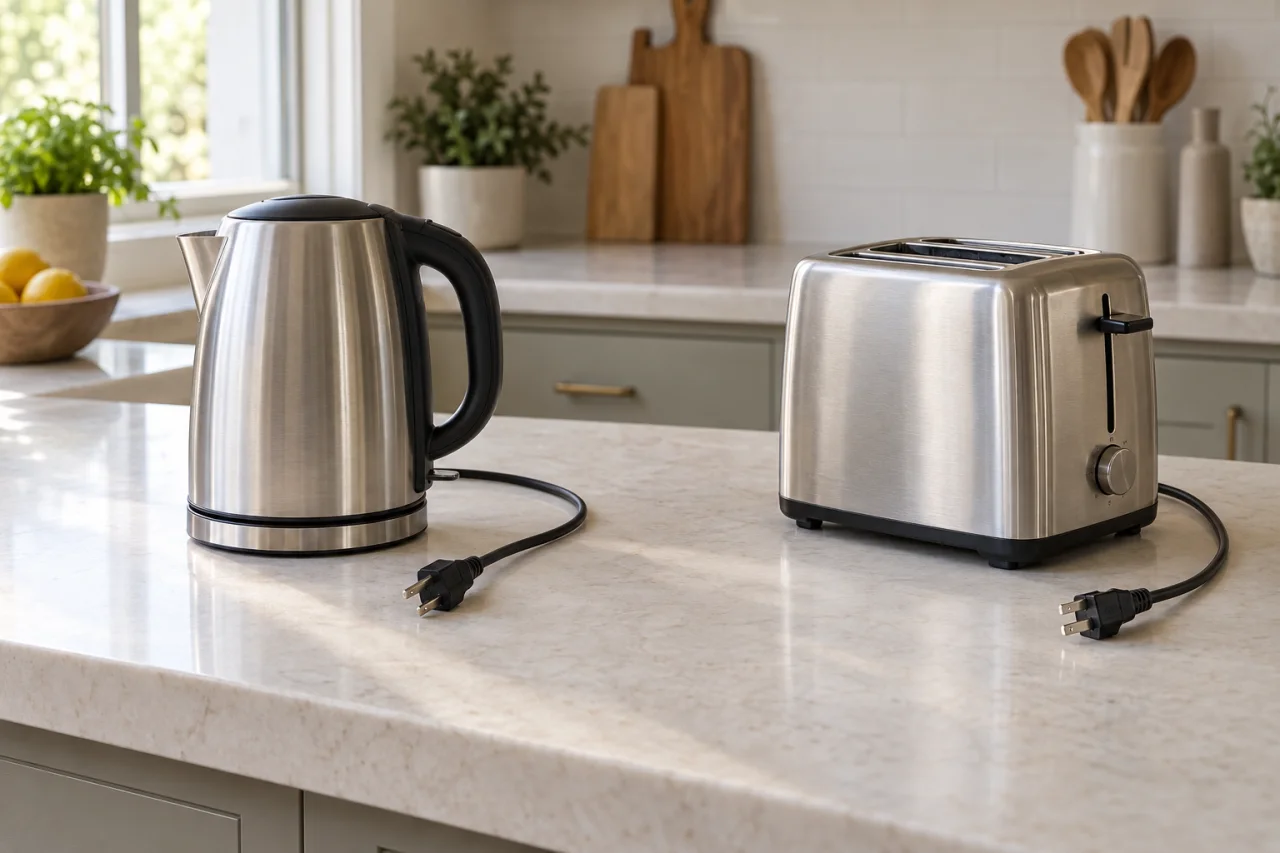
An overload happens when equipment draws more current than the circuit can safely carry for long enough. Think of several demanding appliances operating together, rather than a broken wire. An overload can take time to trip the breaker; it does not always happen the instant an appliance starts. (eaton.com)
If trips coincide with overlapping appliance use, reduce simultaneous demand. Remember that different outlets can share one circuit: moving a plug across the room may change nothing. Circuit labels and a professional assessment can help establish what the circuit actually serves. ESFI recommends additional circuits for high-energy equipment where needed. (cpsc.gov)
A useful question is whether your normal routine exceeds the existing circuit’s capacity. If so, scheduling appliances separately may reduce demand temporarily, while a properly designed additional circuit may be a more practical long-term option. That decision is different from replacing a defective breaker. (esfi.org)
Appliance faults and wiring faults can look similar
A short circuit is an unintended current path that bypasses the normal load and can produce very high current. A ground fault involves current taking an unintended path toward ground. Damaged appliances, cords or wiring can be involved; these are not problems to solve by allowing more current through. (eaton.com)
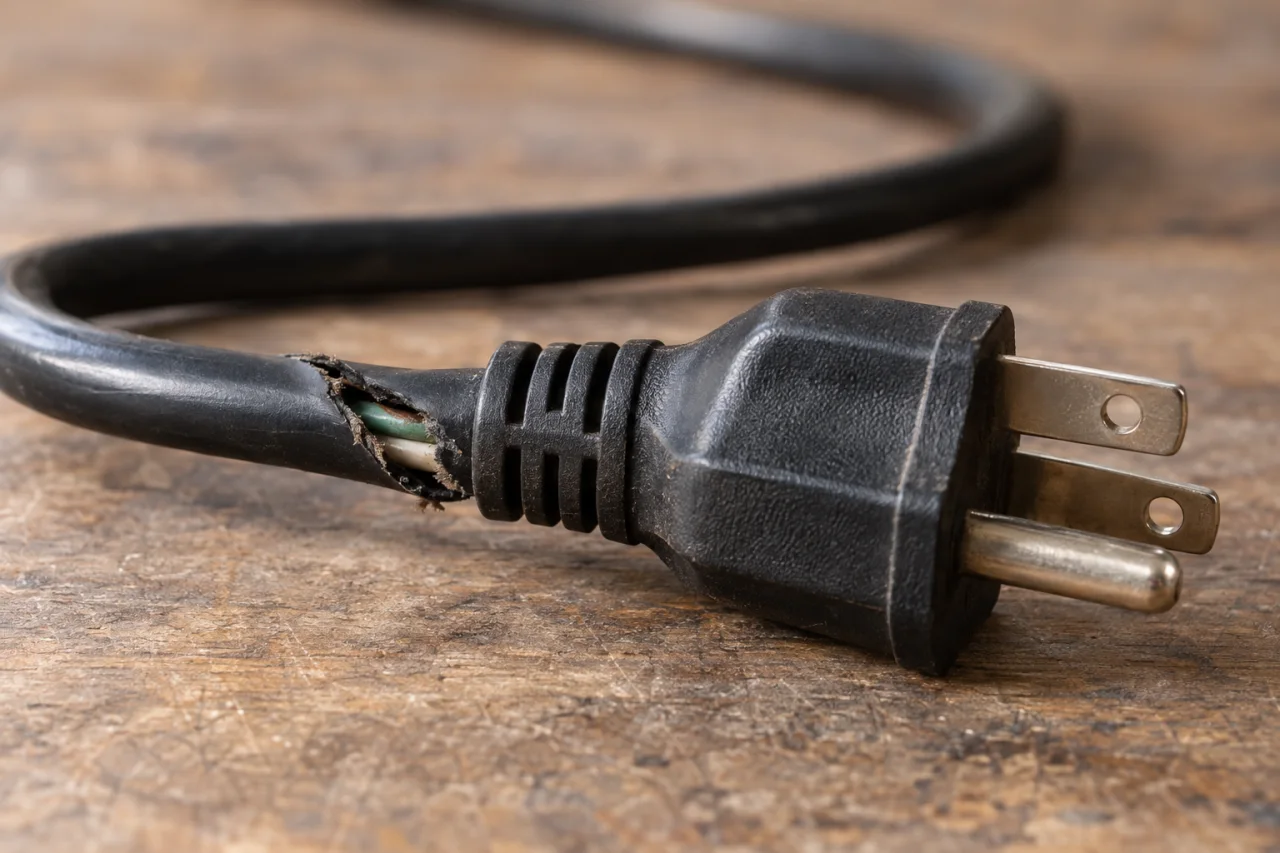
Patterns can narrow the questions, but they cannot establish a diagnosis. Do not move a suspect appliance between outlets to see whether it trips another circuit. Stop using equipment with damaged cords or plugs and describe the original event to the electrician. (electrification.us.abb.com)
Use these patterns to describe the problem—not to diagnose or repeatedly recreate it.
| Observed pattern | Possible significance | Important limitation | Practical next step |
|---|---|---|---|
| Trips during overlapping appliance use | Combined demand may be excessive | An appliance fault can produce a similar pattern | Reduce simultaneous use and discuss circuit capacity |
| Trips when one appliance starts | The appliance, its cord or the circuit may be involved | Timing does not identify the failed component | Stop using the suspect appliance pending assessment |
| Trips immediately after resetting | A fault may still be present | This does not prove the breaker itself is defective | Leave the circuit off and contact an electrician |
| Shows an arc-fault or ground-fault indication | Additional protection may have operated | Indicators and meanings vary by manufacturer and model | Record visible information safely and consult the correct instructions |
AFCI and GFCI trips are not simply overload trips
Some breakers do more than respond to excessive current. Ground-fault circuit interrupter protection helps address shock hazards, while arc-fault circuit interrupter protection detects arcing associated with fire hazards. Dual-function devices combine these protective functions with circuit-breaker protection. A trip can therefore occur without an obvious collection of high-demand appliances running. (electrification.us.abb.com)
Some electronic breakers provide indicators that distinguish overloads, arc faults, ground faults or internal self-test failures. Leviton’s diagnostic guidance illustrates why the exact model matters: different light patterns mean different things. Do not apply an online blink-code chart from another manufacturer. (leviton.com)
Compatibility-related unwanted trips are possible, but that is a conclusion to investigate—not a reason to dismiss a protective trip. Record what is already visible without removing covers or cycling the breaker to produce a code. (electrification.us.abb.com)
Gather useful observations without recreating the fault
Keep observations separate from experiments. A brief account of what happened is more useful than repeatedly energizing a questionable circuit. Note the pattern from memory and photograph only what is safely visible. Do not remove the panel’s protective cover, tighten connections or attempt electrical testing yourself. CPSC reserves defect identification and repairs for qualified electrical professionals. (cpsc.gov)
If the equipment has a test button, follow its own instructions for routine testing and maintenance. Do not assume another breaker’s testing schedule or diagnostic sequence applies. A self-test failure indication deserves service rather than being treated as an ordinary interruption. (leviton.com)
- Which lights, outlets or appliances lost power?
- What equipment was operating when the trip occurred?
- Did it happen immediately or after equipment had been running?
- Was there a recent appliance change, repair or water exposure?
- Were there odors, sounds, visible damage or an indicator already showing?
Why a larger breaker is not a shortcut
A breaker’s rating is part of the circuit’s protection. Installing a higher-rated breaker without evaluating the wiring and equipment can allow unsafe current and overheating. The objective is to protect the conductors, not simply keep power flowing. Never bypass a breaker or increase its rating to suppress trips. (eaton.com)
The appropriate remedy might be reducing demand, repairing a fault, adding a circuit or replacing a verified defective breaker. A broader upgrade is a separate planning decision. If you are considering more equipment or additional circuits, planning an electrical panel upgrade should begin with the actual loads and existing system—not the assumption that every recurring trip requires a new panel. (esfi.org)
Breaker protection and surge protection solve different problems
Ordinary circuit breakers address overcurrent; they are not substitutes for surge protective devices. A voltage surge is a different electrical event from an overloaded branch circuit. ESFI specifically distinguishes surge protection from breakers, GFCIs and ordinary power strips. (esfi.org)
If you are reviewing protection for electronics and appliances, discuss Surge Protection separately from the tripping problem. A surge device does not add circuit capacity, repair damaged wiring or make repeated resetting safe. Likewise, a breaker staying on does not establish that equipment is protected against transient voltage surges. (esfi.org)
Ask for the cause before choosing the repair
Ask for an explanation that connects the proposed work to the observed problem. Manufacturer guidance calls for qualified troubleshooting and model-specific testing; replacing parts solely because a breaker trips can leave the underlying issue unresolved. (electrification.us.abb.com)
The Electric Knight offers Circuit Breakers services for homes in West End and throughout Moore County, including troubleshooting and replacement. When requesting an assessment, describe what lost power, what was operating and any warning signs. Discuss the observations, arrange an appropriate assessment and review the proposed work before proceeding.
- What evidence points to an overload, equipment fault, wiring problem or breaker failure?
- What repair or capacity change addresses that cause?
- Will the proposed solution preserve the appropriate protective functions?
- What work and equipment are included in the proposal?
- What testing or maintenance instructions apply afterward?
Questions & answers
Does a breaker that keeps tripping need replacement?
Not necessarily. Overloads, appliance faults, wiring problems and protective-device operation can all explain trips. A breaker may need service or replacement if it is damaged or its self-test diagnostics indicate failure, but repeated trips alone do not establish that diagnosis. (electrification.us.abb.com)
Why does the breaker trip when I use two appliances together?
Their combined demand may exceed the circuit’s capacity. This pattern supports investigating an overload, but does not rule out an appliance fault. Reduce simultaneous use rather than continuing to reproduce the trip, and ask whether the equipment needs a separate circuit. (esfi.org)
What if the breaker trips with everything unplugged?
Unplugging portable equipment does not disconnect hardwired lights, appliances or the circuit wiring itself. Leave a repeatedly tripping circuit off and arrange an assessment rather than assuming the breaker is defective. (cpsc.gov)
Can I replace an AFCI breaker with a standard breaker to stop trips?
Do not remove protective functions as a troubleshooting shortcut. AFCI protection addresses arcing hazards that ordinary overload protection does not. An electrician should investigate the fault indication, installation and equipment compatibility before recommending an appropriate remedy. (electrification.us.abb.com)
Will surge protection stop an overloaded circuit from tripping?
No. Surge protection addresses transient voltage surges; it does not increase circuit capacity or correct an overload. Likewise, an ordinary circuit breaker does not replace a surge protective device. (esfi.org)
Sources & further reading
- Electrical Safety Foundation International: Home Electrical Safety
Warning signs of overloads, reducing demand and considering additional circuits for high-energy equipment.
- Eaton: Circuit Breaker Fundamentals
Differences among overcurrent, overloads and short circuits, and the role of breakers in protecting conductors.
- ABB: Electronic Circuit Breaker Trip Troubleshooting
Electronic protective functions, possible appliance compatibility issues and the need for qualified troubleshooting.
- Leviton: Diagnosing Your Circuit Breaker
Model-specific diagnostic indicators for ground faults, arc faults, miswiring and self-test failures.
- Eaton: AbleEdge Smart Breaker Installation Guide
Manufacturer instruction to leave an immediately retripping breaker off and obtain qualified assistance.
- U.S. Consumer Product Safety Commission: Guide to Home Wiring Hazards
Electrical warning signs, shared circuit loads, homeowner observation limits and professional assessment of wiring defects.
- Electrical Safety Foundation International: Surge Protective Devices
Distinction between surge protective devices and ordinary breakers, GFCIs and power strips.
- CPSC Staff Report: Considerations for Installation of Smoke Alarms on Residential Branch Circuits, October 2005
Technical background on overcurrent protection and the overheating risk of substituting higher-rated protection.
- www.mass.gov
Guidance referenced in this article on Why Does a Circuit Breaker Keep Tripping.
- www.cdc.gov
Guidance referenced in this article on Why Does a Circuit Breaker Keep Tripping.
- https://leviton.com/content/dam/leviton/residential/product_documents/instruction_sheet/AFCI-GFCI-Thermal-Breaker-Instruction-Sheet.pdf
Guidance referenced in this article on Why Does a Circuit Breaker Keep Tripping.
Prepared and automatically checked on . Conditions, costs and requirements can change. Ask about the details that apply to your situation.
Continue reading
Helpful next reads

Is This an Electrical Emergency? Warning Signs and Safe Next Steps
A practical guide to choosing between evacuation and 911, a utility hazard report, and an electrical repair request—without approaching damage or testing suspect equipment.

Planning an Electrical Panel Upgrade: Loads, Permits and Inspections
Before agreeing to a panel replacement or service upgrade, understand what is driving the recommendation, what the proposal includes and how permits, inspection and power restoration will be coordinated.

GFCI, AFCI, Tamper-Resistant and Weather-Resistant: What Is the Difference?
These four labels address different hazards. Learn how shock protection, arc-fault protection, internal shutters and outdoor ratings work together—and what to ask before replacing an outlet.