
Practical guides · process
Planning an Electrical Panel Upgrade: Loads, Permits and Inspections
Before agreeing to a panel replacement or service upgrade, understand what is driving the recommendation, what the proposal includes and how permits, inspection and power restoration will be coordinated.
What you’ll learn
- Breaker space, panel condition and service capacity are separate questions; a useful proposal explains which problem it addresses.
- Include planned appliances in the load discussion rather than choosing service size by guesswork.
- Confirm the permitting jurisdiction, inspection requirements and utility responsibilities before scheduling an interruption.
- Compare written inclusions, exclusions and change-approval terms—not just proposal totals.
- Verify the electrical contractor’s license and request insurance information separately.
An electrical panel replacement and an increase in electrical service capacity are not necessarily the same project. One may address existing equipment; the other may change how much power the home can receive and involve utility-side work. Understanding that distinction helps you ask better questions before approving a proposal. (energystar.gov)
For homeowners in West End and across Moore County, the practical starting point is a defined need: what condition requires attention, what equipment you plan to add and which approvals the project will require. This guide outlines planning considerations to discuss with an electrical contractor before committing to the work.
1. Define the problem before choosing the project
Start by describing what prompted the conversation: repeated trips, a home-inspection finding, damaged equipment, an addition or a planned appliance. These are different starting points. Frequent breaker trips and lights dimming when equipment starts are reasons for professional evaluation, not a diagnosis you can make from the hallway. Record when symptoms happen and which equipment is operating. (esfi.org)
Ask what evidence supports repair, replacement or further investigation. North Carolina’s home-inspector guidance distinguishes a visual inspection from the more involved evaluation an electrical contractor may need to determine whether particular equipment needs repair, modification or replacement. Do not remove protective covers to investigate yourself. (ncosfm.gov)
If tripping is your main concern, Why Does a Circuit Breaker Keep Tripping? is a useful companion to the upgrade discussion. The immediate question is what is wrong—not how large a replacement panel should be.
2. Separate breaker space from electrical demand
An electrical load assessment considers the home’s existing demand together with proposed additions. Bring a list of planned equipment, including vehicle charging, electric cooking, water heating and heating or cooling changes. Appliance specifications help turn a vague request for “more power” into a defined requirement. ENERGY STAR recommends discussing both panel capacity and planned appliances with a licensed electrician. (energystar.gov)
Do not add together the numbers on the branch breakers to calculate service demand. Breaker ratings are not the same as actual simultaneous household use. The Department of Energy’s panel-upgrade factsheet expressly distinguishes physical space for breakers from electrical capacity. (bsesc.energy.gov)
Ask which calculation method supports the recommendation and whether suitable demand records can help. National laboratory research describes both equipment-based calculations and methods using maximum-demand data. An ordinary monthly energy total is not a substitute for an electrician’s assessment of the applicable method. (nrel.gov)
3. Know whether the proposal changes the panel or the service
“Panel upgrade” can describe several different projects. A replacement may address equipment condition without increasing the amount of electricity available from the utility. A service-capacity increase is a broader decision that may involve the utility’s supply arrangements as well as customer-owned equipment. ENERGY STAR notes that a panel project can lead to changes to the lines supplying the house. (energystar.gov)
Use the distinctions below when comparing proposals. None is a recommendation without an assessment of the existing installation. Electrical Options & Planning offers a place to continue considering related choices.
Similar-sounding electrical projects solve different constraints.
| Option | When it may fit | Important limitation |
|---|---|---|
| Panel replacement without a service-capacity increase | Existing equipment needs replacement, but assessed demand fits the available service. | New equipment does not by itself increase utility supply capacity. |
| Additional circuit space or an approved panel arrangement | The constraint is room for circuits rather than total electrical demand. | Equipment compatibility and the existing system still require professional evaluation. |
| Increased service capacity | Existing and planned loads cannot be supported by the assessed service. | May require utility work and changes beyond the panel enclosure. |
| Lower-demand equipment or suitable load management | Planned appliances create a capacity constraint that another equipment strategy might address. | Suitability depends on the equipment, household needs and approved design. |
4. Establish the permitting jurisdiction and scope
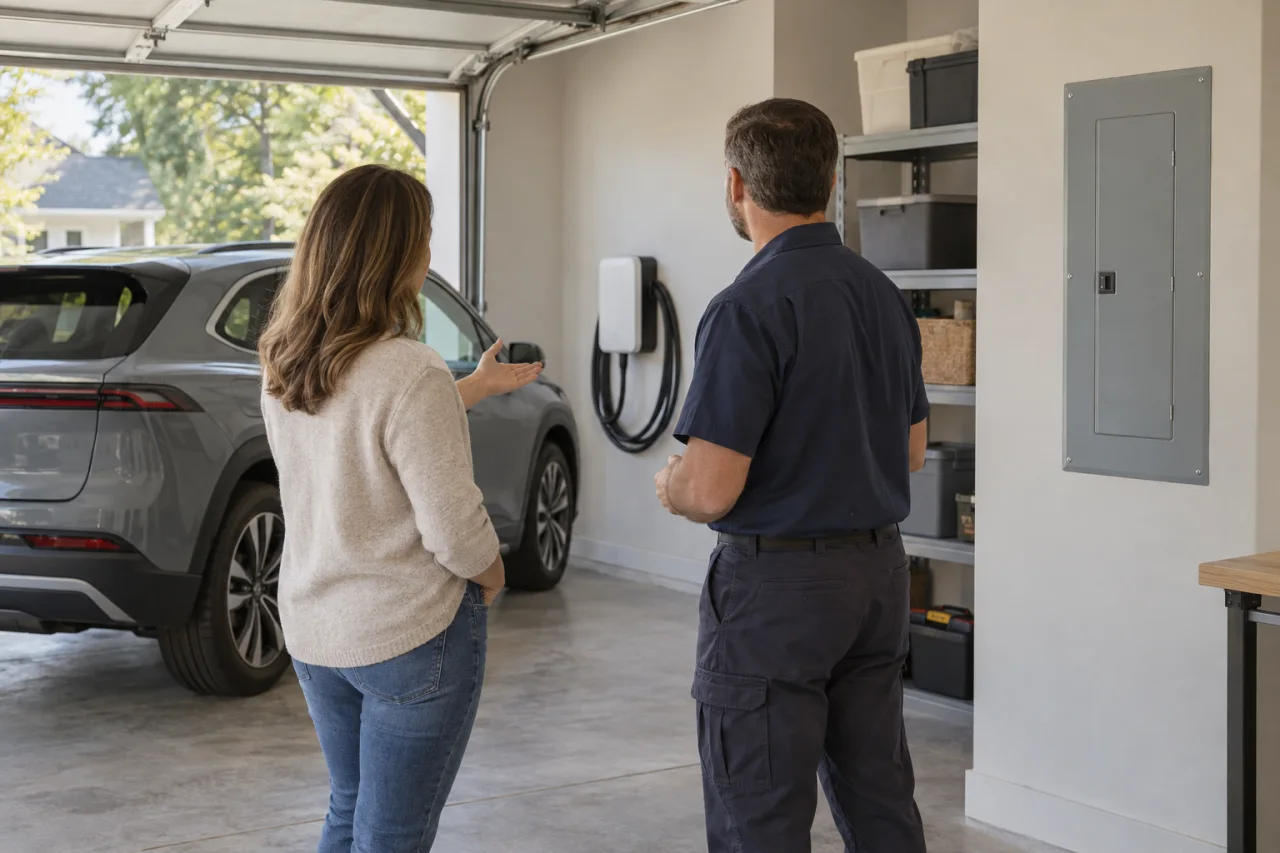
Confirm the inspection authority using the property address rather than assuming the mailing city determines it. Moore County publishes an Individual Trade Permit Application Packet covering electrical work. Southern Pines also maintains its own public application and inspection portal, illustrating why the correct jurisdiction matters locally. (moorecountync.gov)
Before work is scheduled, ask who will obtain the permit, which inspections apply and which code requirements govern the proposed alteration. Avoid relying on a generic online checklist as a project-specific determination.
Also clarify the boundary of the work. North Carolina’s June 18, 2019 interpretation addresses service-equipment replacement and existing circuitry outside the permitted scope. It does not support a blanket assumption that every panel project requires whole-house rewiring—or that unrelated hazards can be ignored. Ask for a clear explanation of any additional corrections identified for your property. (ncosfm.gov)
5. Plan the outage around approvals, not just installation
Identify the utility serving the property and ask whether the proposed work requires its involvement. Duke Energy’s published Carolinas builders’ guide describes permits and inspection approval as prerequisites for connecting upgraded service. Confirm current arrangements directly with the serving utility; an older published guide is not a scheduling commitment for your address. (www4.citizenserve.com)
Ask how disconnection, installation, inspection release and reconnection will be coordinated. Who initiates each request? What happens if an inspection needs correction or utility work cannot proceed as expected? A date for electrical installation alone does not answer those questions.
Prepare a household-specific interruption plan. Discuss refrigeration, internet access, well-water needs and any equipment that cannot tolerate an interruption. For a broader preparation checklist, read A Moore County Storm-Outage Plan for Essential Power Needs. Ask about an expected outage window and a contingency—not a guaranteed restoration hour.
6. Make the written proposal answer the important questions
Request a proposal detailed enough to compare scope, not simply the headline price. ENERGY STAR identifies circuit length, access for wiring and utility-side service changes as potential cost considerations. Ask which of those conditions applies to your home rather than treating national examples as a local quote. (energystar.gov)
The questions below help expose differences between proposals. A lower total may cover a smaller job; a broader proposal should explain why the added work is necessary. Keep required corrections separate from optional future-ready improvements so you can make an informed decision.
- What documented condition or load assessment supports the proposed work?
- Does the scope replace the panel only, or also change service capacity?
- Are meter equipment, conductors, grounding, bonding or circuit modifications included where needed?
- Who handles permits, inspections and utility coordination?
- Which access work, wall repairs, disposal and labeling are included or excluded?
- How will newly discovered conditions and additional charges be approved?
7. Verify credentials and agree on closeout records
Ask for the electrical contracting business’s license number and verify it through the North Carolina State Board of Examiners of Electrical Contractors. Its public search accepts company names and license numbers. Confirm that the business identified in the proposal corresponds to the license information. The Board also describes different license classifications and their scope limitations. (arls-public.ncbeec.org)
Treat insurance as a separate question. Request current evidence of applicable coverage and ask who to contact for clarification; a license lookup does not verify an insurance policy.
Agree on closeout expectations before work begins: inspection results, an understandable circuit directory, equipment information and a record of approved scope changes. Moore County publishes instructions for scheduling inspections and viewing results, giving owners a practical way to ask about permit progress rather than relying only on a verbal update. (moorecountync.gov)
8. Keep the plan useful after the work is finished
Keep the circuit directory useful as rooms and appliances change. Ask the electrician about equipment-specific maintenance and when later additions should trigger another capacity discussion. New high-energy equipment deserves consideration before installation, not after recurring trips begin. ESFI recommends qualified electrical evaluation when major appliances are added and emphasizes identifying circuits. (esfi.org)
A sensible next step is a conversation about the condition you have observed and the equipment you want to support. The Electric Knight provides Circuit Breakers services, including panel upgrades and fuse-to-breaker conversions, for Moore County homes. Before agreeing to work, seek a recommendation that connects the identified need, proposed equipment, permit responsibilities and outage arrangements. The goal is a clearly defined project—not simply a larger box on the wall.
Questions & answers
Does a full panel automatically mean I need a larger electrical service?
No. Physical breaker space and electrical capacity are different constraints. Ask whether an approved panel arrangement or another suitable option can accommodate the project, and request a load assessment before deciding to increase service capacity. (bsesc.energy.gov)
Will replacing the panel fix a breaker that keeps tripping?
Not necessarily. Frequent trips warrant evaluation, but they do not establish that the whole panel needs replacement. Ask the electrician to identify the problem and explain how the proposed repair addresses it before approving broader work. (esfi.org)
Who handles the permit and utility arrangements?
Have the proposal name the responsible party for each task. Confirm the permitting authority for your address, who schedules inspections, and who coordinates any utility disconnection and reconnection. Do not assume these arrangements are included merely because equipment installation is quoted. (moorecountync.gov)
Does a panel replacement require the entire house to be rewired?
Not automatically. North Carolina’s June 18, 2019 guidance distinguishes permitted service-equipment work from existing circuitry outside that scope, while addressing discovered violations separately. Ask what additional work is necessary for your particular installation and why. (ncosfm.gov)
Can anyone promise exactly when power will return?
Treat a proposed restoration time as a planning estimate, not a guarantee. Ask what inspection approval and utility release are needed, and agree on a contingency if either is delayed. Duke Energy’s published Carolinas guide describes inspection approval as a prerequisite to service connection. (www4.citizenserve.com)
Sources & further reading
- U.S. Department of Energy: Home Electrification and Electric Panel Upgrades
Distinguishes breaker space from electrical capacity and explains why adding breaker ratings is not a household load calculation.
- ENERGY STAR: Make Your Home Electric Ready
Planning around future appliances, panel versus service changes, alternatives and wiring-access cost factors; national price examples are not used as local estimates.
- National Renewable Energy Laboratory: Equitable Strategies for Residential Building Electrification
Equipment-based and maximum-demand approaches to evaluating existing and proposed residential loads.
- Maryland Energy Administration: Electric Panels—Responsible Pre-Electrification
Panel and service assessment before electrification and consideration of alternatives such as load management.
- Moore County: Building Applications—Miscellaneous
Moore County’s published electrical trade-permit application resources.
- Town of Southern Pines Public Portal
Southern Pines maintains a public application and inspection portal; owners should confirm the authority for their address.
- North Carolina OSFM: Electrical Violations Outside the Permitted Scope of Work, June 18, 2019
Dated state interpretation distinguishing permitted service-equipment work from existing circuitry and separately discovered violations.
- Duke Energy: Builders’ and Contractors’ Guide for Electric Service—Carolinas
Published utility guidance on inspection approval and service connection; current project arrangements must be confirmed with the serving utility.
- https://www.esfi.org/home-electrical-safety/
Guidance referenced in this article on Planning an Electrical Panel Upgrade: Loads, Permits and Inspections.
- https://www.ncosfm.gov/licensing-cert/home-inspector-licensure-board-hilb/hilb-statutes-and-rules
Guidance referenced in this article on Planning an Electrical Panel Upgrade: Loads, Permits and Inspections.
- https://arls-public.ncbeec.org/Public/Search
Guidance referenced in this article on Planning an Electrical Panel Upgrade: Loads, Permits and Inspections.
- https://www.moorecountync.gov/DocumentCenter/View/1694/Schedule-Inspections-Online-view-inspection-results-PDF
Guidance referenced in this article on Planning an Electrical Panel Upgrade: Loads, Permits and Inspections.
Prepared and automatically checked on . Conditions, costs and requirements can change. Ask about the details that apply to your situation.
Continue reading
Helpful next reads
Why Does a Circuit Breaker Keep Tripping?
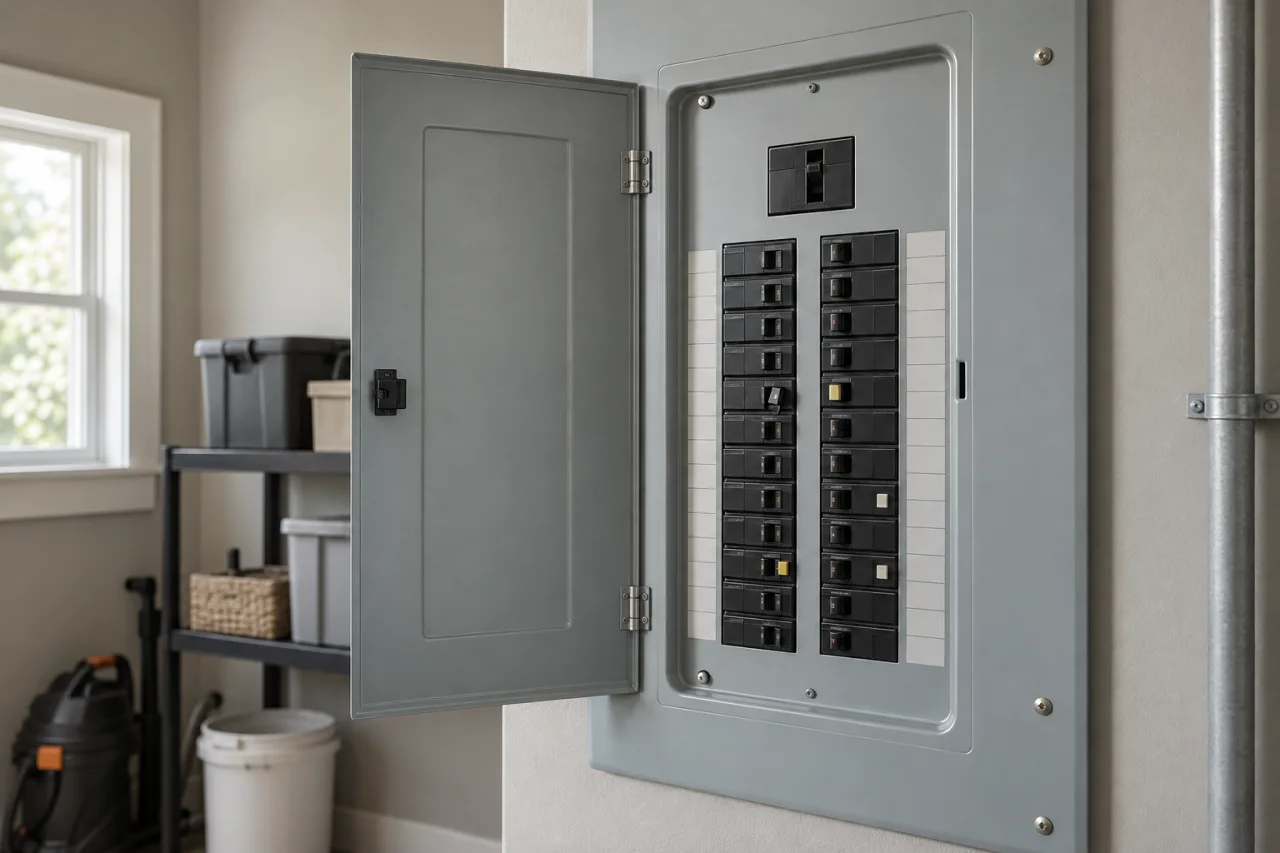
A repeatedly tripping breaker may be protecting you from an overload or electrical fault—not asking to be replaced. Learn which patterns matter and when to leave the circuit off.
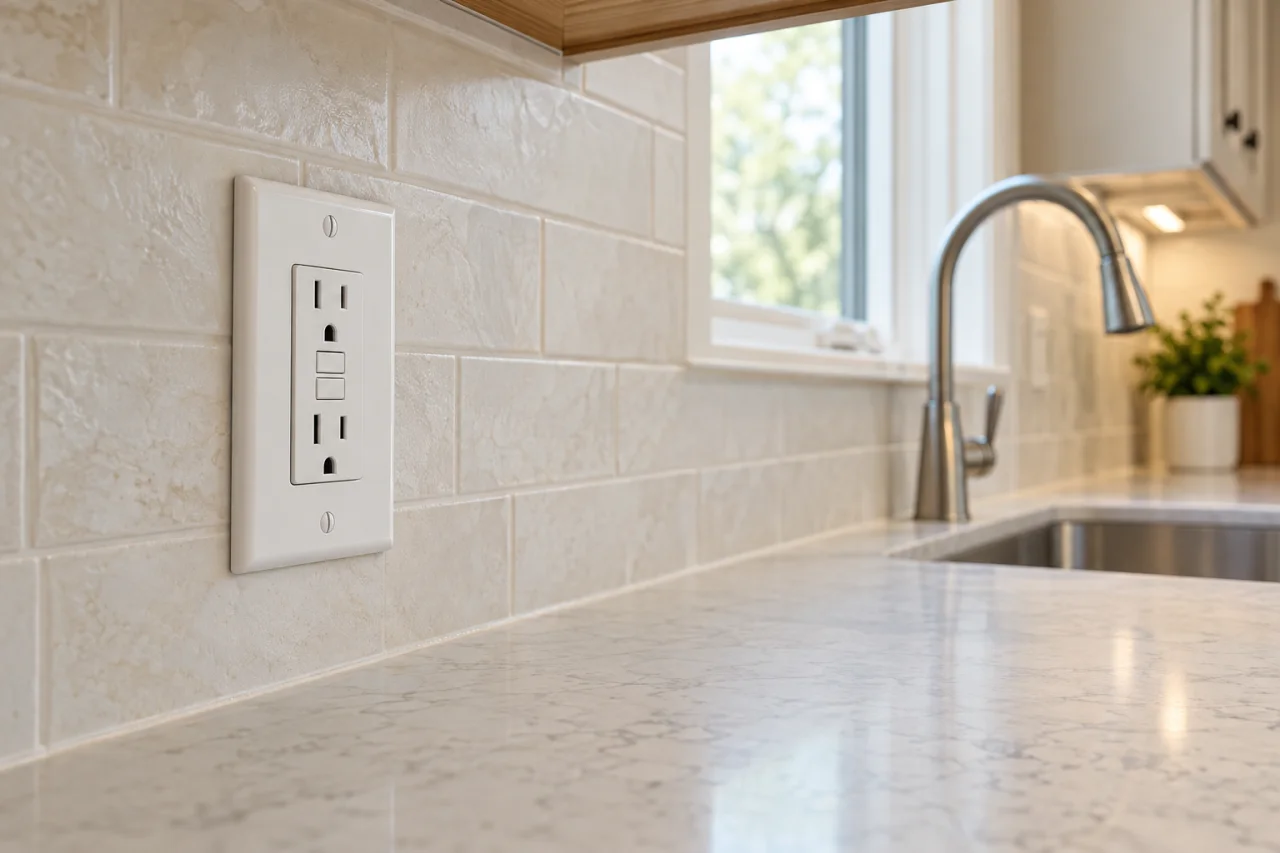
GFCI, AFCI, Tamper-Resistant and Weather-Resistant: What Is the Difference?
These four labels address different hazards. Learn how shock protection, arc-fault protection, internal shutters and outdoor ratings work together—and what to ask before replacing an outlet.

Older-Home Electrical Problems: Targeted Repair or a Broader Upgrade?
An older home does not automatically need rewiring. Learn how condition, grounding, wiring type and household loads help distinguish a targeted repair from a broader upgrade.