
Practical guides · comparison
GFCI, AFCI, Tamper-Resistant and Weather-Resistant: What Is the Difference?
These four labels address different hazards. Learn how shock protection, arc-fault protection, internal shutters and outdoor ratings work together—and what to ask before replacing an outlet.

What you’ll learn
- GFCI addresses ground-fault shock hazards; AFCI addresses hazardous arcing. Neither replaces the other. (cpsc.gov)
- TR shutters and WR construction are separate features that can accompany electronic protection. (leviton.com)
- Outdoor receptacles need an appropriate enclosure and cover, not just a WR marking. (leviton.com)
- Confirm project-specific North Carolina requirements and keep up with manufacturer-directed testing. (ncosfm.gov)
Choosing a safer outlet is not a contest between four acronyms. GFCI, AFCI, tamper-resistant and weather-resistant describe different protections, and several may belong in the same installation. The practical question is which hazards exist at that location—and which combination addresses them. (cpsc.gov)
For homeowners in West End and across Moore County, this guide separates the features, explains kitchen, bathroom and outdoor considerations, and outlines questions to ask before authorizing work.
Four labels, four different jobs
Start with the hazard, not the appearance of the outlet. GFCI addresses ground-fault shock hazards; AFCI addresses hazardous electrical arcing that can start fires. Tamper-resistant shutters restrict access to receptacle contacts, while weather-resistant construction is designed for outdoor exposure. None substitutes for all the others. (cpsc.gov)
The comparison below describes features, not four mutually exclusive purchases. A single installation may need several. Device selection also depends on the circuit and applicable installation requirements, not simply which product fits the wall plate. (leviton.com)
Four complementary protection features: benefits, applications and limitations.
| Feature | Benefit | Where it applies | Limitation or tradeoff |
|---|---|---|---|
| GFCI | Detects current imbalance and interrupts power to reduce severe shock risk. | Especially relevant where electrical equipment may encounter water. | Does not supply tamper-resistant shutters or a weather rating. |
| AFCI | Detects hazardous arcing associated with electrical fires. | Relevant to dwelling circuits covered by applicable AFCI requirements. | AFCI alone is not equivalent to GFCI shock protection. |
| Tamper-resistant, or TR | Built-in shutters restrict insertion of most foreign objects. | Relevant to household receptacles, including locations accessible to children. | Does not detect ground faults or hazardous arcing. |
| Weather-resistant, or WR | Uses construction designed to resist outdoor environmental exposure. | Relevant to receptacles in wet or damp outdoor locations. | Still needs suitable enclosure protection and applicable GFCI protection. |
GFCI: protection against ground-fault shock
A ground-fault circuit interrupter monitors outgoing and returning current. A small imbalance can indicate current escaping its intended path, potentially through a person. The device interrupts power to reduce the risk of severe shock. It is not permission to handle wet electrical equipment or assume every shock scenario is covered. (cpsc.gov)
Protection can be located at a receptacle or in a circuit breaker. A correctly wired GFCI receptacle can also protect downstream outlets, so a plain-looking outlet may already have protection elsewhere. Conversely, buttons alone do not establish that protection works. Have the protected locations identified and tested rather than buying a replacement based on looks. (cpsc.gov)
AFCI: protection against hazardous arcing
An arc-fault circuit interrupter responds to hazardous arcing conditions. Ordinary breakers address overloads and short circuits but may not respond to early arcing that can ignite nearby material. AFCI protection adds a different safeguard; it does not repair a deteriorated connection or damaged cord. (cpsc.gov)
Watch the terminology. A combination-type AFCI addresses series and parallel arcing; “combination” does not mean it includes GFCI protection. A dual-function AFCI/GFCI device provides both functions. Ask for the full protection description rather than relying on a test-button color or the word “combo.” (leviton.com)
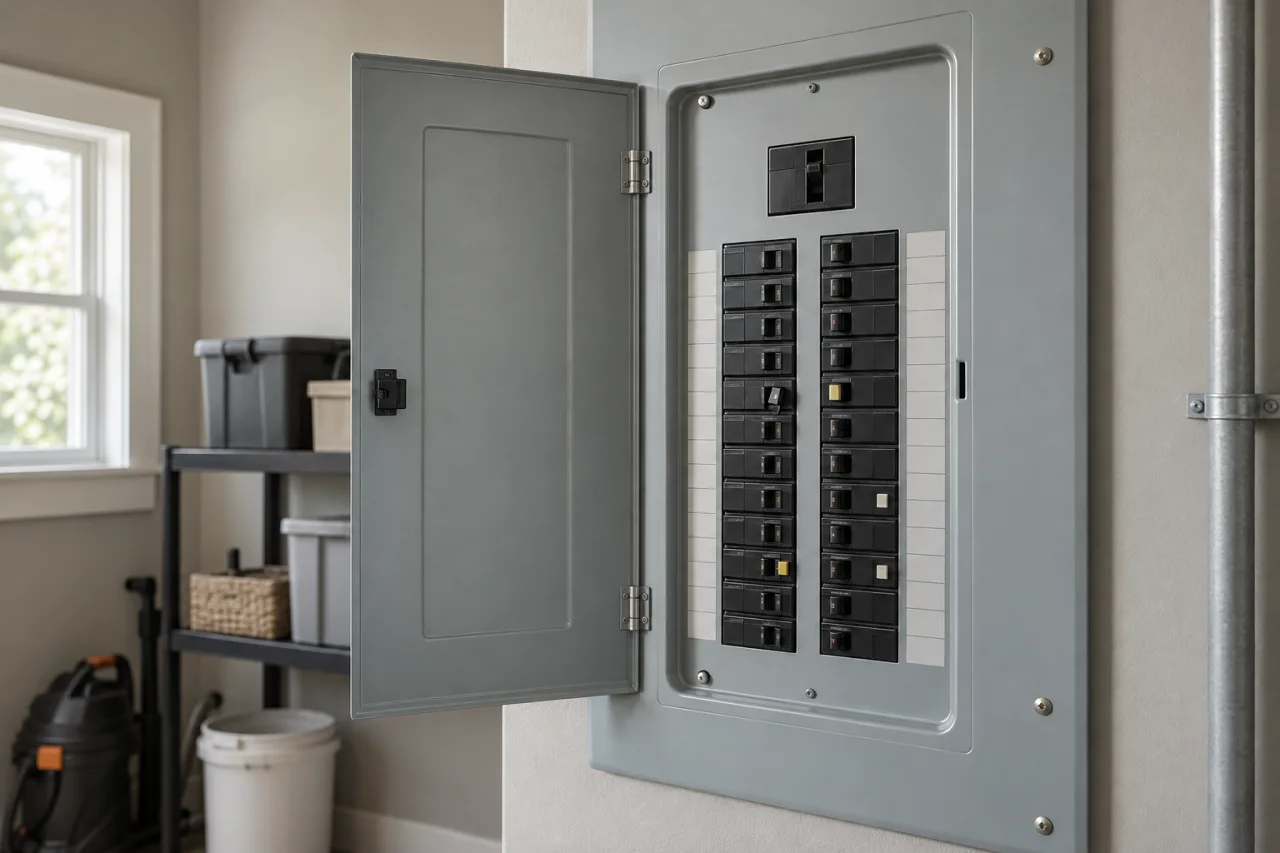
For panel-related planning, see Circuit Breakers. If recurring trips prompted your research, Why Does a Circuit Breaker Keep Tripping? is a useful companion topic. Have the cause investigated rather than treating removal of protection as the solution.
Tamper-resistant: a barrier inside the slots
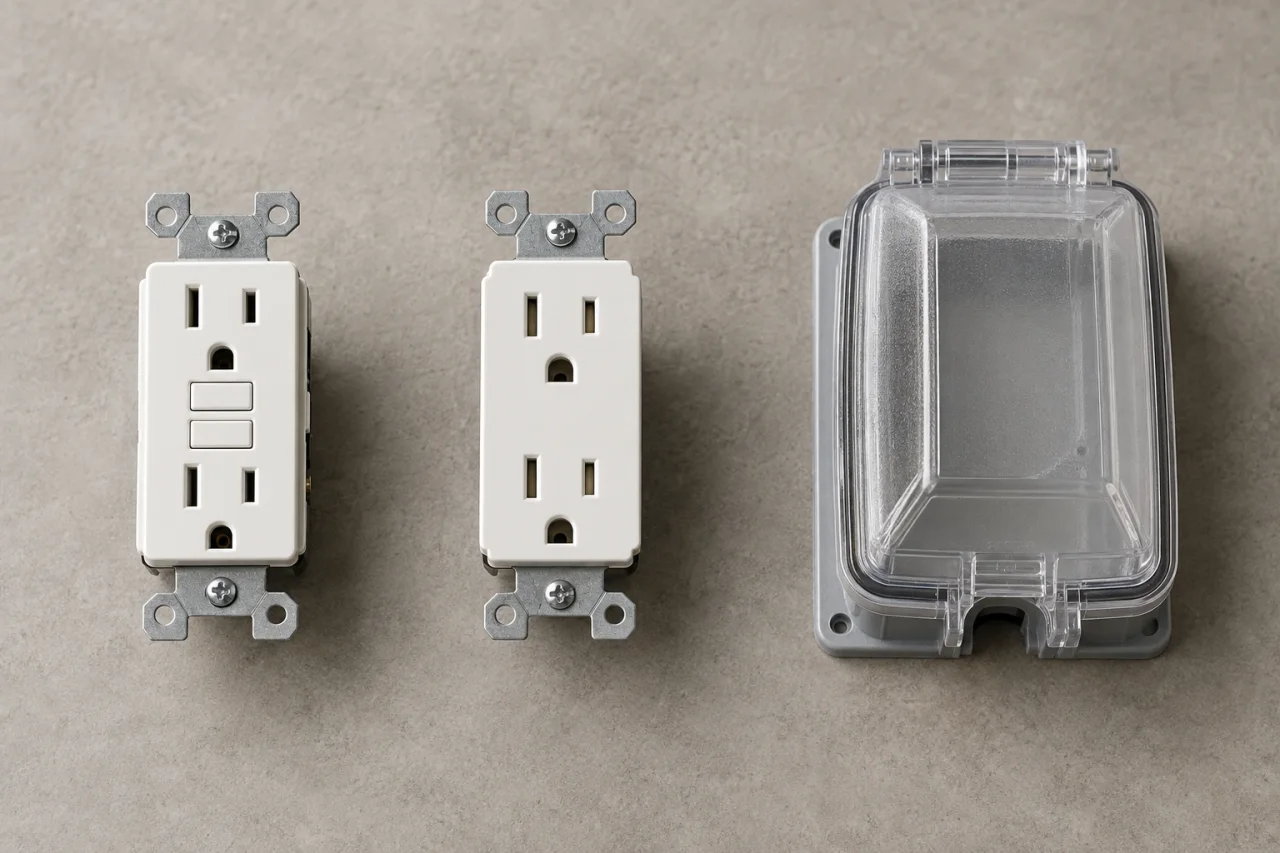
Tamper-resistant receptacles have internal shutters that restrict access to the energized contacts from most foreign objects while admitting an appropriate plug. This is a physical barrier, not fault-detecting electronics. A TR receptacle can also include GFCI or AFCI functionality. (leviton.com)
For a household with children, the distinction matters: installing a GFCI does not automatically provide shutters, and installing shutters does not automatically provide GFCI protection. Specify both where needed. “Tamper-resistant” should not be read as childproof or as a reason to allow children to play with plugs and outlets. (leviton.com)
Weather-resistant: construction plus the right cover
Weather-resistant receptacles use materials and components intended to withstand outdoor exposure, including ultraviolet light and corrosion. WR describes the device’s construction; it does not mean the outlet can sit uncovered in rain. (leviton.com)
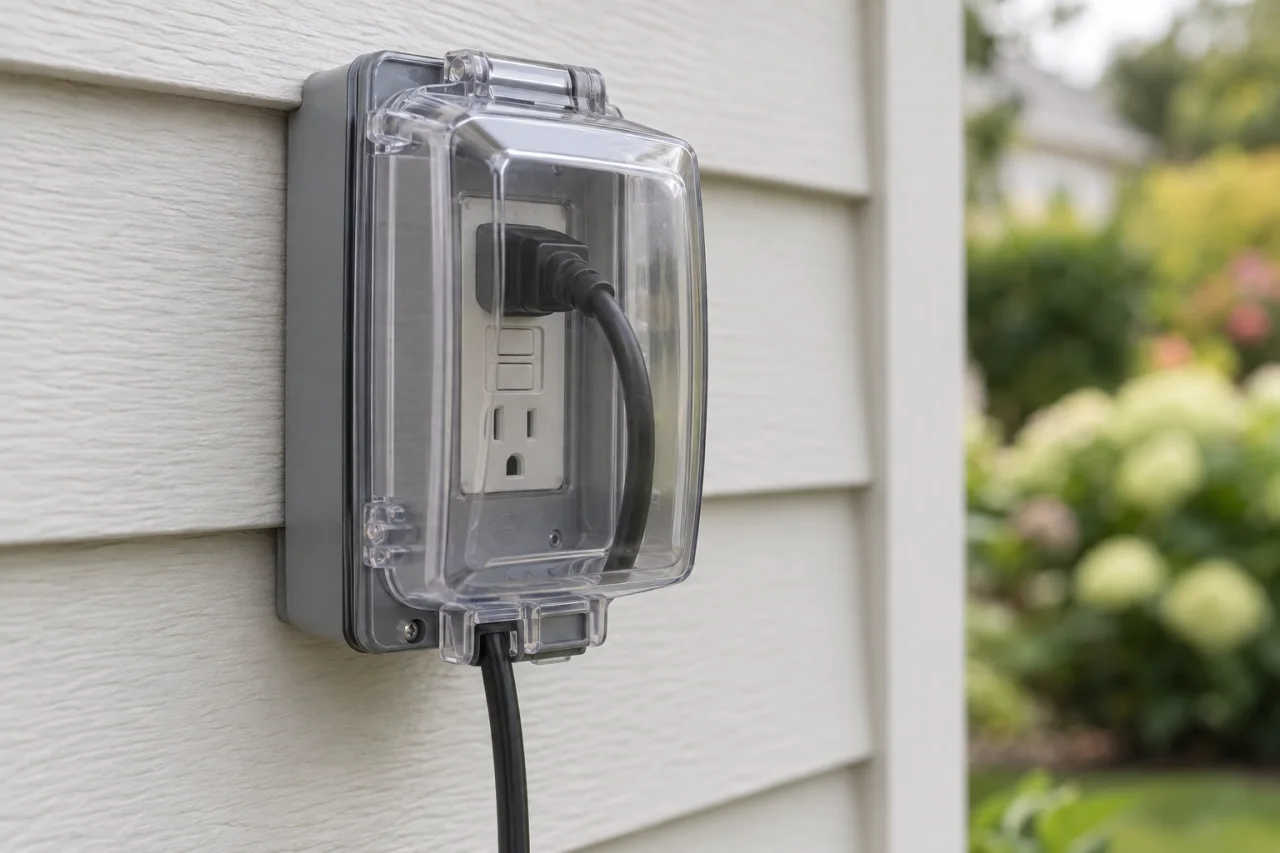
The enclosure and cover are separate decisions. Directly exposed wet locations generally call for a suitable extra-duty while-in-use cover that protects the receptacle with a plug inserted. A sheltered damp location may allow a different approved cover. Have the actual exposure classified rather than assuming that every porch is dry. (leviton.com)
Consider the plug as well as the outlet: an oversized plug or cord arrangement should not prevent the intended cover from closing. A WR/TR/GFCI receptacle can combine several protections, but it still needs the appropriate enclosure assembly. (leviton.com)
Apply the features to the room—and the project
Kitchens, bathrooms and outdoor locations are longstanding priorities for GFCI protection. Kitchens can also involve AFCI requirements, so asking “GFCI or AFCI?” may present a false choice. Ask which protections apply to the particular receptacle, appliance and branch circuit. (cpsc.gov)
For Moore County projects, do not assume the newest published national code is the enforceable residential code. As checked on November 6, 2026, North Carolina OSFM lists the 2023 State Electrical Code as indefinitely delayed and lists the 2020 code with an exception for one- and two-family dwellings. Confirm the applicable edition, state amendments and scope with the permitting authority before selecting equipment. (ncosfm.gov)
An existing home, a replacement receptacle and a remodeled kitchen are not automatically the same code question. Ask how replacement, extension or renovation provisions affect the proposed work rather than using the home’s age as the only guide. (leviton.com)
Compare the complete installation, not just the device
A receptacle-level device can place reset access near the point of use; a protective breaker places it at the panel. These are not universally interchangeable installations. Circuit layout, existing wiring and the permitted protection method determine the appropriate arrangement. Panel work belongs with a qualified electrician; parts can remain energized even when the main breaker is off. (leviton.com)
For budgeting, request a scope rather than a device-only price. Factors affecting the scope and cost include condition, access, scope and required parts or equipment. Ask whether the proposal is a straightforward replacement or includes troubleshooting, wiring correction or an outdoor enclosure. Electrical Options & Planning can help organize those decisions before discussing Outlets & Switches with the team.
- Ask which hazards and code requirements the proposed device addresses.
- Ask where protection begins and which downstream outlets it covers.
- Ask whether protection belongs at the receptacle, breaker or both.
- Ask whether the quote includes diagnosis, required labels, covers and any wiring repairs.
- Ask what testing and reset instructions should remain with the homeowner.
Keep protection working after installation
CPSC recommends testing GFCIs after installation, at least monthly and after a power failure, following the manufacturer’s instructions. Its home safety checklist also recommends monthly AFCI testing. Plan for the power interruption before testing anything that supplies important equipment. (cpsc.gov)
If a device fails its prescribed test, will not restore power or repeatedly trips, seek assessment instead of assuming the electronics are merely inconvenient. Indicator lights are model-specific; consult the installed device’s instructions. (cpsc.gov)
Discoloration, unusual warmth, loose plug fit or damaged covers deserve attention independently of whether protection trips. Stop using visibly damaged equipment and arrange electrical help. When discussing work with The Electric Knight, describe the location, what was connected and what happened—observations are more useful than guessing which acronym will solve it. (cpsc.gov)
Questions & answers
Can one receptacle be GFCI, tamper-resistant and weather-resistant?
Yes. Products combine these three features, but each still does a separate job. The outdoor enclosure and cover must also suit the exposure; combined receptacle features do not replace them. (leviton.com)
Does every protected outlet need TEST and RESET buttons?
No. A properly configured upstream GFCI receptacle or GFCI breaker can protect outlets without local buttons. Have the protected outlets identified rather than judging protection by appearance. (cpsc.gov)
Does GFCI protection add a ground wire to an older outlet?
No. Certain ungrounded receptacle replacements can use GFCI protection, with required labeling, but that does not create an equipment-grounding connection. Ask an electrician about the permitted arrangement and equipment needs. (cpsc.gov)
Will AFCI protection fix damaged wiring?
No. AFCI protection can reduce fire risk from hazardous arcing, but damaged wiring and defective connections still require repair. Treat protective devices as an additional safeguard, not a substitute for sound wiring. (cpsc.gov)
Is a self-testing GFCI maintenance-free?
No. Leviton instructs users to test its self-test GFCI receptacles monthly. Follow the instructions for the installed model, including the meaning of indicator lights and what to do after a failed test. (leviton.com)
Sources & further reading
- CPSC: GFCI Fact Sheet
GFCI operation, receptacle and breaker protection, downstream coverage, ungrounded replacements and testing guidance.
- CPSC: Preventing Home Fires—Arc Fault Circuit Interrupters
AFCI purpose, limitations of ordinary breakers, distinction from GFCI protection and professional installation precautions.
- CPSC Guide to Home Wiring Hazards
Electrical warning signs, damaged wiring concerns and limits of protective devices.
- CPSC: Home Electrical Safety Checklist
Monthly AFCI testing and household observations involving outlets, cords and outdoor equipment.
- North Carolina OSFM: State Electrical Code and Interpretations
North Carolina code adoption status, delayed 2023 code and the one- and two-family dwelling exception.
- Leviton: Tamper-Resistant Receptacles Product Bulletin
Tamper-resistant shutter operation, applications and availability alongside other protective features.
- Leviton: Weather-Resistant Products for Outdoor Safety
Weather-resistant construction, wet versus damp exposure, protective covers and overlapping WR, TR and GFCI features.
- Leviton: Dual Function AFCI/GFCI Frequently Asked Questions
Dual-function versus combination-type AFCI terminology, reset-location tradeoffs and circuit-dependent installation considerations.
- https://leviton.com/products/ium1v-kbg
Guidance referenced in this article on GFCI, AFCI, Tamper-Resistant and Weather-Resistant: What Is the Difference.
- https://leviton.com/support/literature/blogs/self-test-gfci-indicators
Guidance referenced in this article on GFCI, AFCI, Tamper-Resistant and Weather-Resistant: What Is the Difference.
Prepared and automatically checked on . Conditions, costs and requirements can change. Ask about the details that apply to your situation.
Continue reading
Helpful next reads
Why Does a Circuit Breaker Keep Tripping?
A repeatedly tripping breaker may be protecting you from an overload or electrical fault—not asking to be replaced. Learn which patterns matter and when to leave the circuit off.

Planning an Electrical Panel Upgrade: Loads, Permits and Inspections
Before agreeing to a panel replacement or service upgrade, understand what is driving the recommendation, what the proposal includes and how permits, inspection and power restoration will be coordinated.

What Affects the Cost of Wiring Repairs?
The visible problem is only the starting point. Learn how diagnosis, circuit extent, access, damaged components and restoration responsibilities shape a wiring repair estimate.