Practical guides · decision
Is This an Electrical Emergency? Warning Signs and Safe Next Steps
A practical guide to choosing between evacuation and 911, a utility hazard report, and an electrical repair request—without approaching damage or testing suspect equipment.

What you’ll learn
- Smoke, flames or suspected electrical fire: leave, stay out and call 911 before arranging repairs.
- Stop using suspect equipment; do not reproduce symptoms, open panels or repeatedly reset breakers.
- Report fallen wires and damaged incoming service equipment without approaching them.
- Partial power may involve the utility supply or the property's wiring; describe the pattern instead of guessing the cause.
- Share observations from safety, then clarify repair, inspection and restoration requirements.
The first decision is not what failed. It is whether you can safely remain nearby. Smoke, flames or suspected electrical fire call for getting out and calling 911—not waiting for an electrician. Other warning signs mean stopping use and arranging professional assessment. (redcross.org)
For homeowners and small-business owners in West End and Moore County, this guide separates those decisions and explains what to report without touching damaged equipment. It is a triage guide, not permission to troubleshoot energized wiring.
Smoke, suspected fire or active arcing: leave and call 911
If you see smoke or flames, get everyone out, stay out and call 911 from outside. Do not delay evacuation to unplug appliances, switch off breakers or gather belongings. If smoke blocks the usual exit, use another safe route; never re-enter to investigate. The American Red Cross makes escape and calling emergency services the priorities. (redcross.org)
Visible flames are not the only threshold. An unexplained burning odor, active arcing or electrical sizzling can indicate a concealed hazard. Massachusetts fire-safety guidance advises immediately contacting the fire department for these signs. If you suspect an electrical fire, leave and call 911 rather than waiting for a repair appointment. Describe what you noticed without trying to prove where it started. (mass.gov)
Choose the next call by the hazard, not the inconvenience
Use this checklist to choose the next call, not to diagnose a fault. More than one organization may be needed: emergency responders address immediate danger, the utility addresses its supply system, and an electrician evaluates customer-side equipment. If conditions worsen, move to the emergency response rather than continuing an ordinary repair request. (redcross.org)
- Smoke, flames or suspected electrical fire: evacuate and call 911; arrange electrical repairs after emergency responders address the immediate danger.
- A fallen wire or damaged line creating a public hazard: stay far away, keep others away and notify 911 and the electricity provider.
- Suspected electric shock to a person: call 911 or emergency medical help; do not touch someone who may still be connected to electricity.
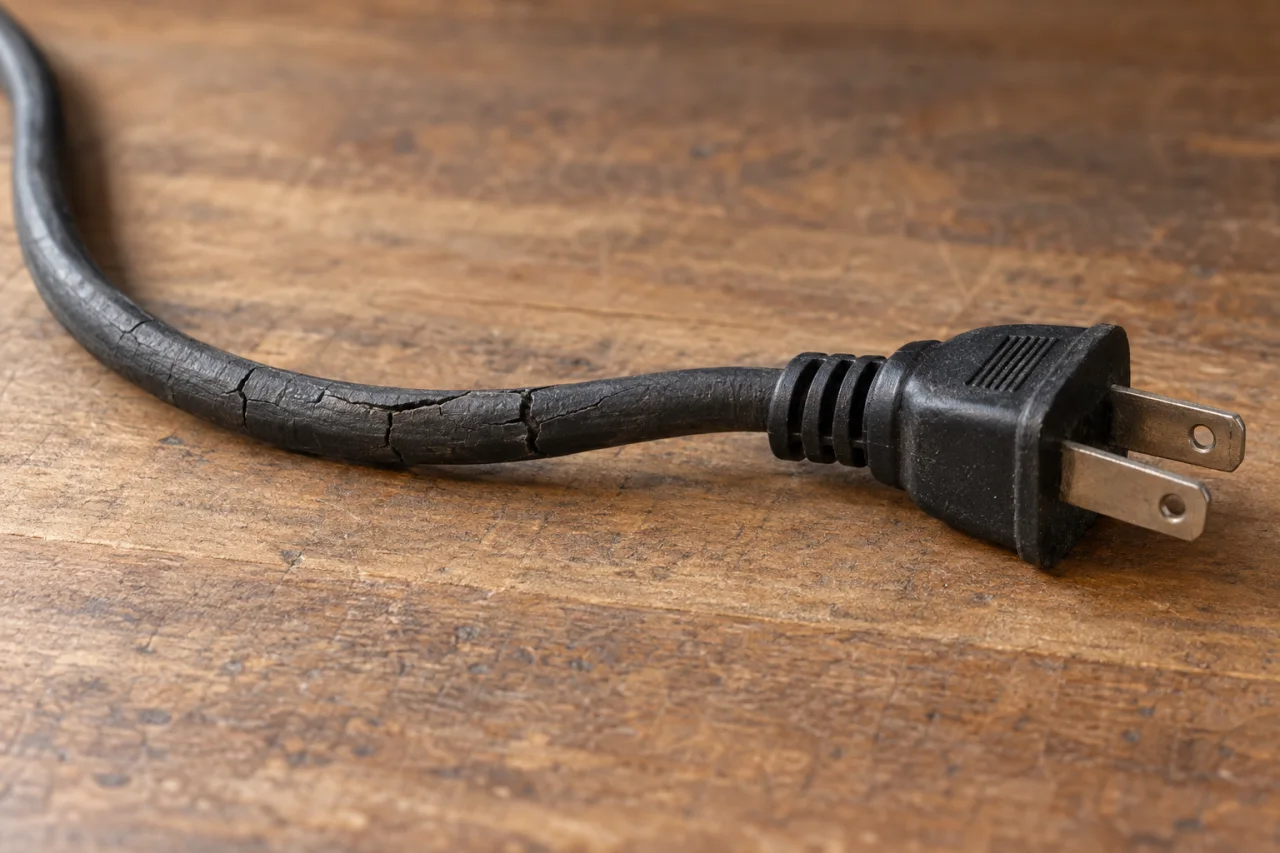
- Discoloration, a damaged cord or repeated breaker trips without active fire signs: stop using the affected equipment and contact a qualified electrician.
- Unexplained partial power loss: report the condition to the electricity provider; an electrician may also be needed.
Hot-looking outlets, damaged cords and repeated trips: stop using them
A discolored receptacle, damaged cord, unusual buzzing or repeated trip deserves attention even when everything still works. NFPA and the Electrical Safety Foundation International identify these as warning signs. Stop using the affected item or outlet; do not plug the same appliance into another outlet simply to see whether the symptom follows it. (content.nfpa.org)
Do not touch a faceplate to check its temperature, remove a cover or pull at a scorched plug. Report heat you already noticed; do not perform a new test. Active sparking, sizzling or a burning odor moves the situation into fire-department territory. (esfi.org, mass.gov)
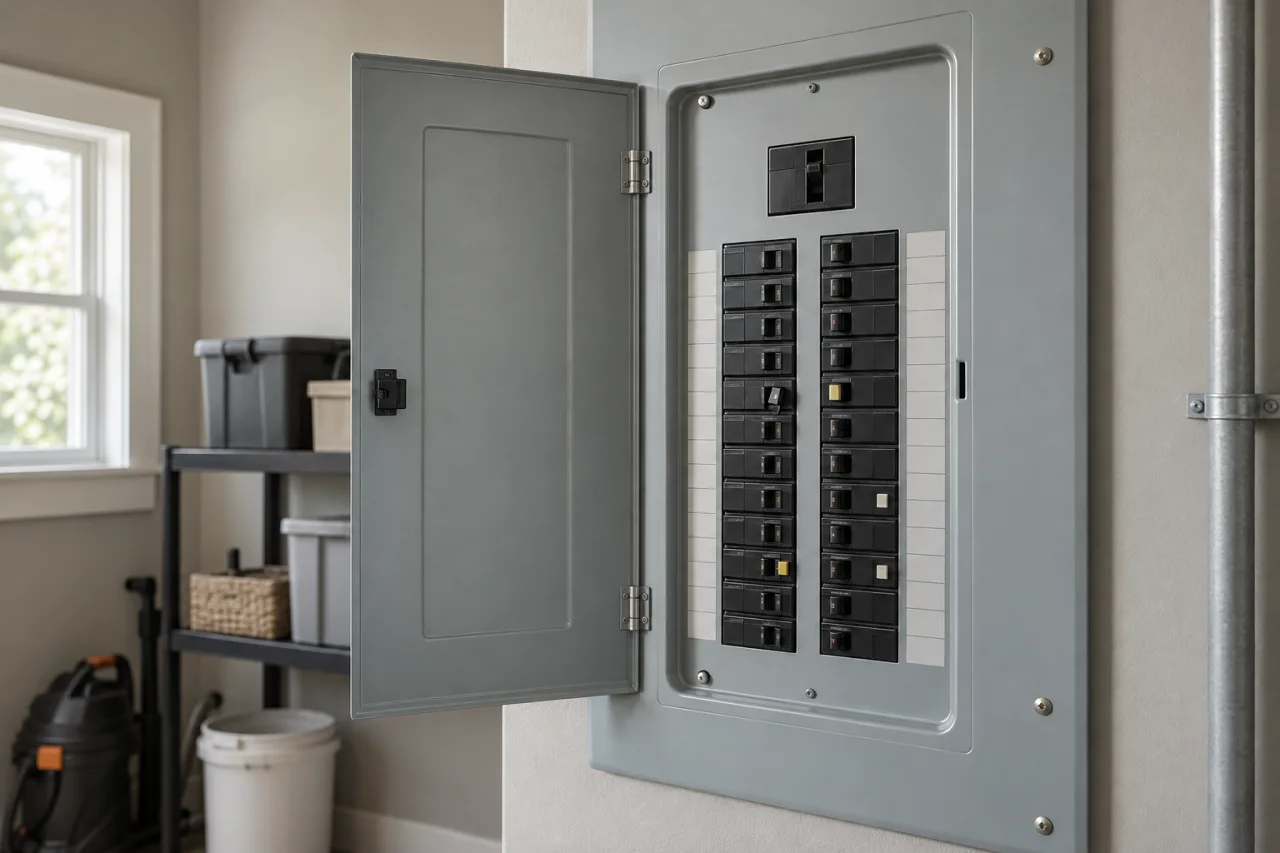
Repeatedly resetting a breaker is not a repair strategy. Keep the affected circuit out of use and request assessment. Once immediate safety is settled, Why Does a Circuit Breaker Keep Tripping? offers a separate discussion of recurring trips and repair questions. (content.nfpa.org)

A shock needs attention for both the person and the equipment
Do not touch an appliance again to confirm a tingle. Stop using it and arrange electrical assessment. A shock is also a medical concern, not just a wiring complaint: CDC advises calling 911 or emergency medical help when someone is believed to have received an electric shock. Do not assume that a small visible mark means a minor injury. (cdc.gov)
If someone may still be touching an energized source, do not grab them or the equipment. Keep yourself clear and follow the emergency dispatcher's instructions. Tell the dispatcher whether the person is responsive and whether contact with electricity may be continuing, using only what you can observe safely. (cdc.gov)
Damaged service equipment: keep your distance and involve the utility
Treat every fallen wire as energized, even if it is quiet and not sparking. Stay far away from it and anything it touches, including fences, branches, vehicles and puddles. Do not walk closer to decide whether it is an electrical, cable or telephone line. Report it to 911 and your electricity provider from a safe location. (home4.nyc.gov)
A meter enclosure pulled away from a wall or damaged overhead service equipment also needs professional coordination. Do not straighten it, fasten it back or touch dangling conductors. Utility guidance warns that damaged service components may remain energized. (news.duke-energy.com)
Ask your provider which repairs belong to the property owner and whether disconnection, an electrician's repair or inspection is required before reconnection. Duke Energy's Carolinas guidance explains that a pulled-away meter box may require an electrician and an inspection. That does not establish ownership of every component at every property. (news.duke-energy.com)
Partial power loss: describe the pattern without testing it
Power in some rooms but not others can be a partial-power condition, not simply a dead outlet. Utility guidance explains that the cause may be within the home's electrical system or its incoming supply. Report the pattern to your electricity provider and ask whether an electrician is also needed. Do not open the panel or meter enclosure to investigate. (oge.com)
Share whether the loss affects one room, several areas or large appliances, based on what you already noticed. Mention unusually bright, dim or flickering lights rather than switching equipment on to reproduce the problem. Flickering and dimming are recognized electrical warning signs. Smoke, burning odors or active arcing take priority over outage reporting. (oge.com)
If water is near electrical equipment, do not enter it to reach a switch. Wet equipment requires professional assessment before power returns. (cdc.gov)
What to tell the dispatcher or electrician
A useful report describes observations rather than a diagnosis: “Several rooms lost power and the lights changed brightness” is more helpful than guessing which component failed. Use this checklist only after reaching safety; it is not an inspection assignment. (oge.com)
For electrical repair help in West End and Moore County, The Electric Knight offers Emergency Electrical Services. Calls are evaluated case by case. Explain what you observed and ask about the appropriate assessment; requesting service does not replace a 911 call or utility hazard report.
- Give the property address, callback number and your current safe location.
- Describe what happened first and approximately when you noticed it.
- Say whether there is smoke, an odor, sparking, a shock, water or visible exterior damage.
- Describe the affected rooms or equipment without operating them again.
- Mention any utility report or emergency-response instructions already received.
- Do not approach damage, open equipment or re-enter an unsafe building to obtain photographs.
After the immediate hazard, plan the repair and safe return to use
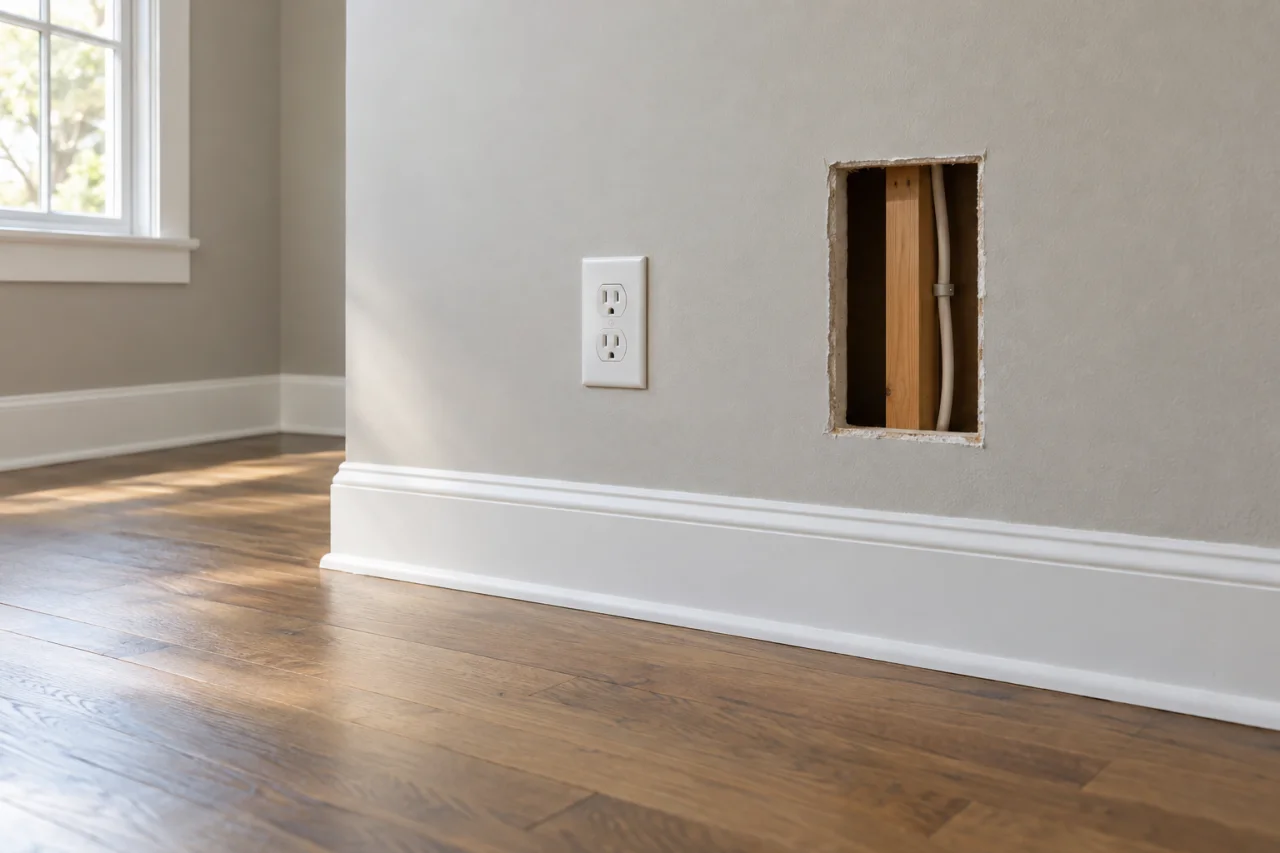
Once immediate danger is addressed, ask what must remain disconnected, what needs repair and who can authorize restoration. If Wiring Repairs are proposed, ask whether the scope addresses the cause as well as visibly damaged parts. Confirm any utility or inspection requirements before treating restored power as clearance to use affected equipment. (esfi.org)
For prevention, keep damaged cords out of service and have recurring warning signs evaluated rather than accepting them as normal. NFPA recommends professional attention for frequent trips, discolored outlets and flickering lights. (content.nfpa.org)
After an outage, use A Moore County Storm-Outage Plan for Essential Power Needs to organize future preparation. Planning belongs after the immediate hazard—not in place of getting out or making the emergency call.
Questions & answers
Should I call 911 if I smell burning but cannot see smoke?
An unexplained electrical burning odor can warrant a fire-department response even without visible flames. Leave and call 911 from outside if you suspect something is burning, especially with sizzling, arcing or a persistent odor. Do not open a wall or panel to locate it. (mass.gov)
Is a mild shock from an appliance something to ignore?
No. Stop using the item and do not touch it again to reproduce the sensation. NFPA identifies tingling from an appliance as a reason to contact a qualified electrician. (content.nfpa.org) For suspected electric shock to a person, CDC advises calling 911 or emergency medical help; electrical burns may involve internal injury. (cdc.gov)
If my neighbors have power, does that rule out a utility problem?
No. Nearby homes can be supplied through different circuits, transformers or fuses. Report your outage to your own electricity provider rather than assuming the fault must be inside your home. (oge.com)
Does a tripped breaker mean the electrical problem is fixed?
No. Frequent trips are a recognized warning sign that needs professional attention. Do not repeatedly reset a breaker or hold it on. Leave the affected circuit out of use pending advice, and escalate to 911 if smoke, suspected fire or active arcing develops. (content.nfpa.org)
Can I use electrical equipment after floodwater has dried?
Dry appearance alone is not clearance to restore power. CDC advises keeping power off until affected electrical equipment has been inspected by a qualified electrician. Never enter standing water to reach a panel or operate electrical equipment while standing in water. (cdc.gov)
Sources & further reading
- American Red Cross: What To Do If A Fire Starts
Evacuation, staying outside, calling 911 and avoiding delays for belongings or investigation.
- Massachusetts Department of Fire Services: Electrical Fire Safety
Immediate fire-department contact for arcing, sparks, sizzling and burning odors; distinction from electrical repair warning signs.
- NFPA: Electrical Safety Checklist
Frequent breaker trips, tingling, discoloration, burning smells, flickering and sparks as reasons for professional attention; damaged-cord precautions.
- Electrical Safety Foundation International: Home Wiring Safety Tips
Wiring-hazard observations including sparks, buzzing, overheating, damaged insulation and shocks; qualified electrical assessment.
- Electrical Safety Foundation International: Electrical Safety Dos
Flickering, dimming, discoloration, buzzing and burning odors as electrical warning signs.
- CDC: What to Do to Protect Yourself From Electrical Hazards
Medical response to suspected electric shock, avoiding contact with an energized person, standing-water precautions and inspection before restoring wet equipment.
- NYC Emergency Management: Be Ready New York
Treating fallen wires as live, avoiding objects touching them and reporting to 911 and the electricity provider.
- Duke Energy: Meter and Service Connection Damage
Avoiding contact with damaged weatherheads, service lines and meter boxes because they may remain energized; not used to establish North Carolina ownership rules.
- https://news.duke-energy.com/releases/duke-energy-continues-to-make-progress-restoring-power%3B-urges-customers-with-meter-box-damage-to-schedule-repairs-now
Guidance referenced in this article on Is This an Electrical Emergency? Warning Signs and Safe Next Steps.
- https://www.oge.com/web/portal/label_ord/outages/report-outage/outage-faq1
Guidance referenced in this article on Is This an Electrical Emergency? Warning Signs and Safe Next Steps.
Prepared and automatically checked on . Conditions, costs and requirements can change. Ask about the details that apply to your situation.
Continue reading
Helpful next reads
Why Does a Circuit Breaker Keep Tripping?
A repeatedly tripping breaker may be protecting you from an overload or electrical fault—not asking to be replaced. Learn which patterns matter and when to leave the circuit off.
What Affects the Cost of Wiring Repairs?
The visible problem is only the starting point. Learn how diagnosis, circuit extent, access, damaged components and restoration responsibilities shape a wiring repair estimate.

Older-Home Electrical Problems: Targeted Repair or a Broader Upgrade?
An older home does not automatically need rewiring. Learn how condition, grounding, wiring type and household loads help distinguish a targeted repair from a broader upgrade.