
Practical guides · cost
Commercial LED Upgrades: Compare Total Cost, Not Just Bulb Prices
A useful commercial LED proposal connects installed cost with operating hours, actual electricity charges, maintenance and light quality. Here is how to compare the assumptions behind the total.
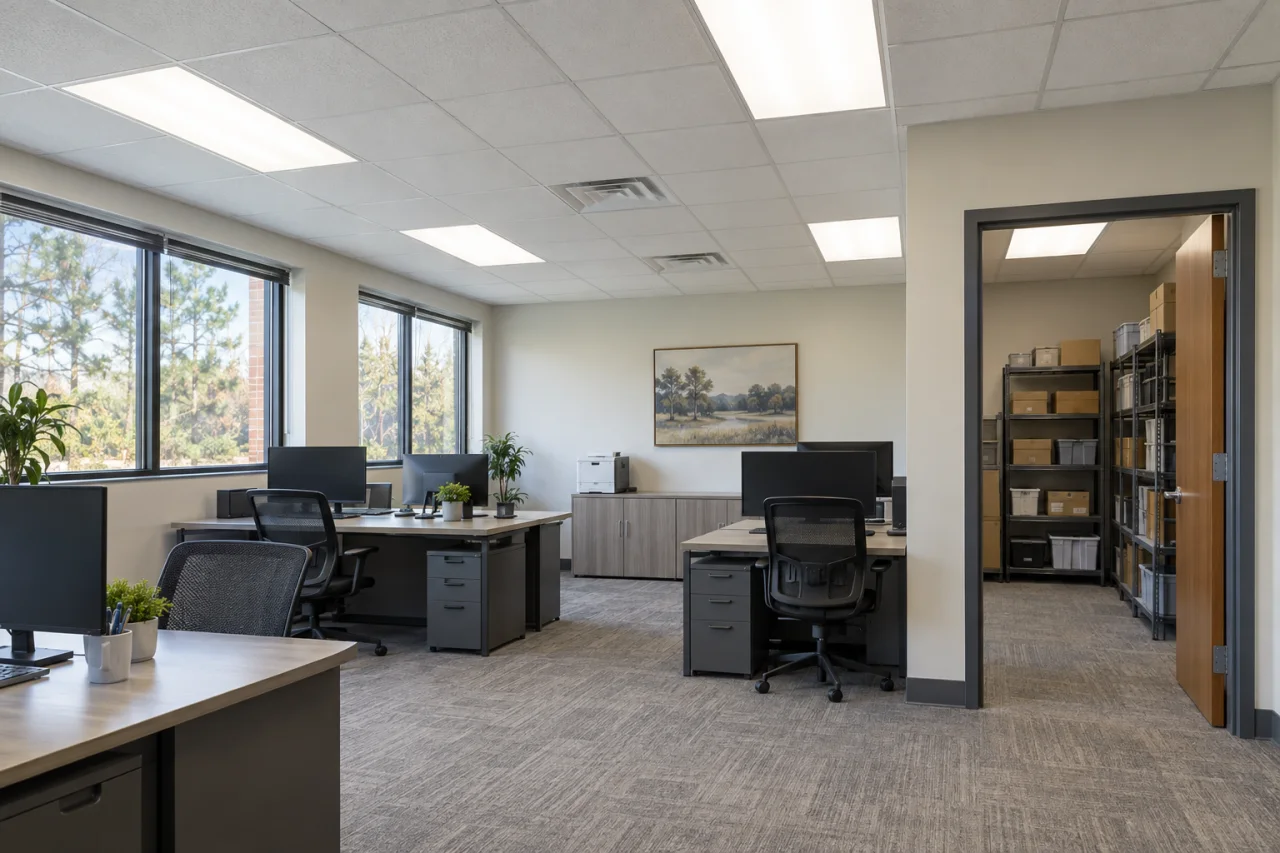
What you’ll learn
- Compare complete installed scopes, not lamp prices or headline savings percentages.
- Use fixture-level system watts, actual operating hours and the charges your electricity reduction can affect.
- Evaluate controls against the proposed LED load and include setup and ongoing management.
- Consider glare, maintenance access, disposal and warranty exclusions alongside energy savings.
- Treat payback as an estimate that changes with assumptions, not a promised result.
A low bulb price does not tell you what a commercial LED upgrade will cost to own. The useful question is whether the proposed system will provide appropriate light with lower operating and maintenance costs under your business’s actual conditions. For a Moore County office, shop or other commercial space, compare proposals using the same fixture inventory, schedules, electricity charges and installation scope. This framework helps separate a straightforward lamp replacement from a broader lighting redesign—and makes estimated payback easier to question.
1. Establish a baseline both proposals can use
Start with a room-by-room inventory rather than one building-wide fixture total. A sales floor, intermittently used stockroom and window-lined office have different schedules and control opportunities.
Request existing and proposed system input watts, including any retained ballast or external driver—not just the wattage printed on a lamp. Record equipment condition, too: replacing lamps leaves other components in service.
Use maintenance records where available. Separate documented replacement expenses from estimates, and distinguish failed lights from lights deliberately switched off. This gives competing proposals the same baseline rather than allowing each bidder to assume a different starting point.
- Count fixtures by area and identify the lamps and supporting equipment being replaced.
- Separate customer hours from cleaning, stocking, security and seasonal lighting hours.
- Record lighting complaints and recent replacement or service costs.
- Identify high ceilings, blocked access and areas where work must be phased.
2. Compare equivalent upgrade paths
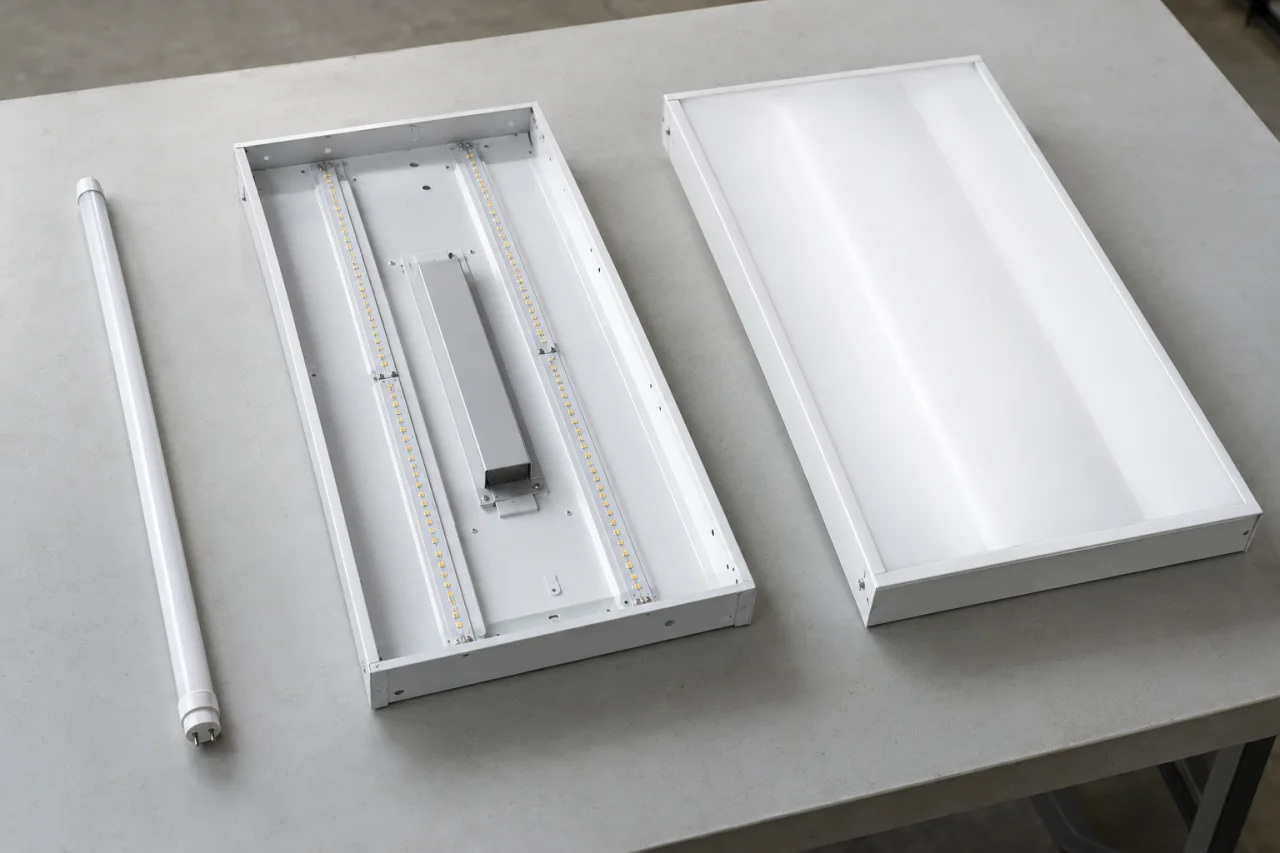
Lamp replacement and fixture-level redesign are different purchases. For fluorescent ceiling fixtures, the following options retain different amounts of existing equipment. Their relative costs are tendencies, not quotes; individual products and installation conditions can change the order.
For more on replaceable bulbs, retrofit kits or integrated fixtures, consider both what stays in place and what becomes easier to service. Ask whether a proposed tube requires wiring changes and whether future replacements must follow a particular configuration. A product described as a replacement lamp is not necessarily a simple swap.
Common fluorescent ceiling-light upgrade paths and their limitations
| Option | When it may fit | Cost and performance limitations |
|---|---|---|
| LED replacement tubes | Existing housings remain suitable and a compatible replacement is available. | Usually lower initial equipment cost, but retained ballasts, compatibility and light distribution need evaluation. |
| LED retrofit kits | Existing housings can remain while the light source and other components are renewed. | Often less installation work than complete replacement; fit, optics and controls still require product-specific review. |
| New fixtures or layout redesign | Equipment condition, ceiling changes or lighting problems justify a broader upgrade. | Usually more extensive installation; a one-for-one replacement alone may not correct poor spacing or excessive light. |
3. Translate watts into realistic bill savings
Calculate annual electricity use by area: fixture count multiplied by system watts multiplied by annual operating hours, divided by 1,000, gives kilowatt-hours. Calculate existing and proposed use separately, then apply the relevant electricity charges. Where dimming or switching changes operation, model those periods separately.
Use your actual rate schedule and bills rather than a national average. Energy charges may vary by season or time of use. Demand charges depend on peak power, while fixed monthly charges generally do not fall with consumption. A lower lighting load does not automatically produce an equivalent percentage reduction in the whole bill.
Show demand savings separately and explain why the lighting reduction would affect the billed peak. If that relationship is uncertain, leave those savings out of the base case.
4. Treat controls as a separate operating decision
Controls are most useful when they match how a space is occupied and how much daylight reaches it. Occupancy sensing, scheduling, daylight dimming and task tuning solve different problems. An intermittently used room may offer opportunities that a continuously occupied interior workspace does not.
Ask for controls savings to be calculated against the proposed LED load, not the original fluorescent load. This avoids counting the same reduction twice. Include sensors, compatible drivers, programming, commissioning and staff instruction in the comparison.
Request a description of zones, overrides and intended settings. Who adjusts a timeout if lights switch off during quiet desk work? Who maintains a networked system? The useful comparison is a configured, manageable installation—not simply a fixture with a sensor attached.
5. Include access, disposal and business disruption
Request an installed-cost proposal rather than a materials total. Ceiling access and above-ceiling conditions can change labor and disruption substantially. A commercial-space electrical planning checklist can help organize questions about occupancy, access and related electrical changes before bids are compared.
For removed fluorescent lamps, establish handling and recycling arrangements before work begins. Include containers, transport and documentation in the scope, and confirm applicable state requirements. Older ballasts may require additional disposal consideration.
If work must happen around customers, inventory or production, ask for a phased-work allowance. Do not assume overnight work, unrestricted access or uninterrupted operations is included.
- Identify equipment, installation labor and any electrical modifications separately.
- Clarify lift or scaffold needs, delivery, access preparation and repeat mobilizations.
- Specify work-area protection, shutdown coordination, cleanup and ceiling repairs where applicable.
- Assign responsibility for removed lamps, ballasts, recycling transport and disposal documentation.
- List exclusions and conditions that could change the agreed scope.
6. Check light quality before committing
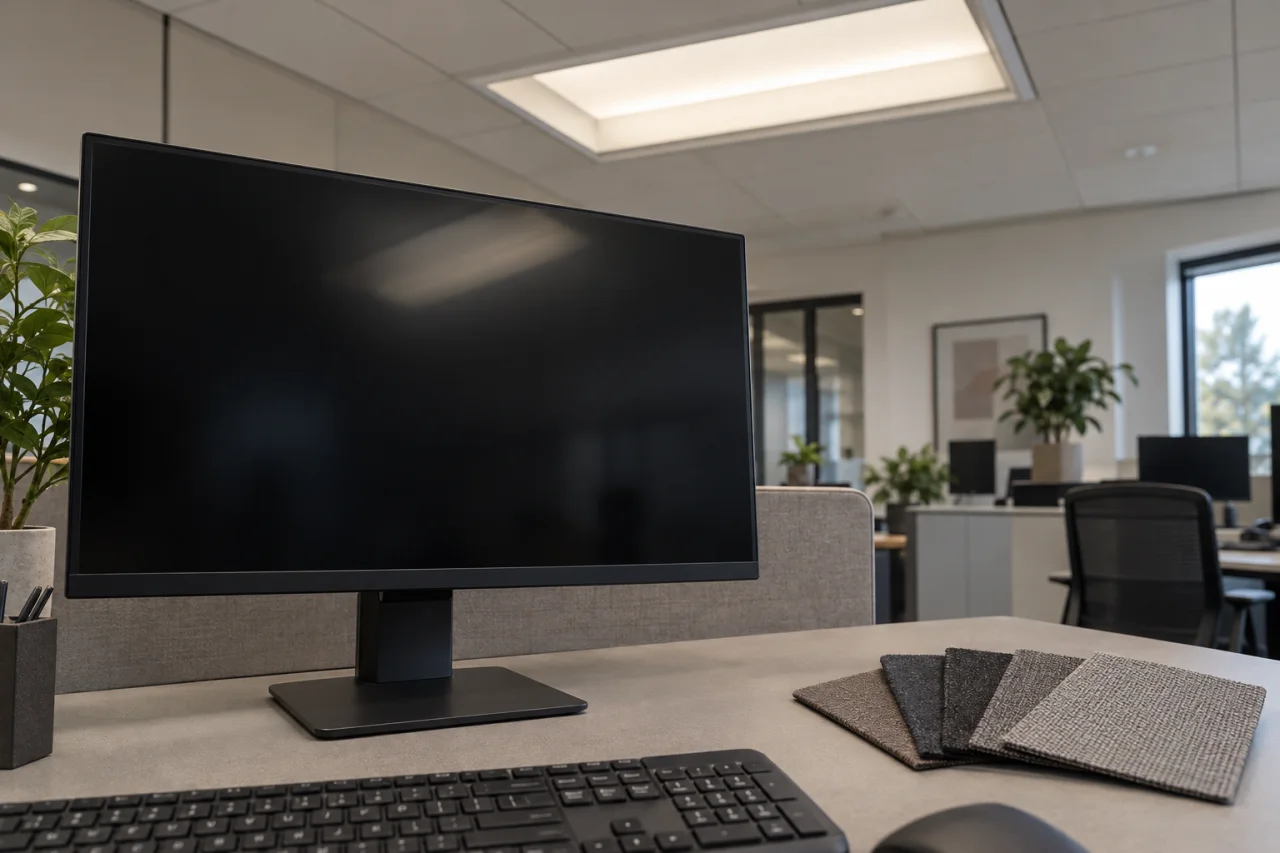
Lower wattage is useful only if the space still supports its tasks. Compare illumination on work surfaces, distribution between fixtures and light on walls—not merely total lumens. A brighter-looking source can create glare without improving useful light.
Ask to evaluate a sample in a representative location before committing to a large quantity. View it from normal seated and standing positions, including at screens and reflective counters. Compare color appearance, color rendering and performance through the intended dimming range. Request product information on flicker and control compatibility.
Discuss acceptance criteria before ordering: which tasks need adequate light, where reflections matter, and what would trigger a product or layout adjustment. A sample is a decision aid, not a substitute for a lighting assessment.
7. Verify qualifications, warranties and incentive assumptions
Request exact model numbers and supporting product data. Where DLC qualification is relevant, verify the proposed product listing rather than relying on a general brand claim. Qualification provides a performance-screening resource; it does not establish that a product suits every room.
Read the actual warranty. Ask about covered components, operating conditions, exclusions, claim procedures, shipping and whether removal, reinstallation or lift costs are included. DLC does not validate manufacturers’ claim processes or resolve warranty disputes.
Keep incentives separate from the base budget until eligibility is confirmed. A qualified-product listing does not guarantee a rebate. Ask the applicable program about project requirements and any approval needed before purchasing.
8. Compare ownership cost, then test the assumptions
Compare alternatives over the same analysis period, including installation, energy, cleaning, replacement parts, service labor and access equipment. Explain maintenance assumptions instead of treating rated life as a promise of maintenance-free operation. Plan to monitor light levels as output declines.
Simple payback divides net initial investment by expected annual net savings. It is a screening measure, not a complete life-cycle comparison: it does not fully capture the timing of future replacements or the value of money over time. Test a conservative case with fewer operating hours, lower control savings and no unconfirmed incentive. Ask what assumptions would change the preferred option.
The Electric Knight offers LED Lighting and Commercial Electricians for businesses in West End and Moore County. Bring the same baseline and scope questions to the discussion so the proposed work can be reviewed before proceeding.
Questions & answers
Is replacing fluorescent tubes always the least expensive choice?
It can have a lower initial equipment cost, but compatibility, retained ballast condition, wiring modifications and future maintenance matter. Compare the installed scope and remaining components, not just the price of each tube.
Should every existing fixture be replaced one for one?
Not automatically. A layout that already produces glare, uneven illumination or excessive light deserves a design review. Replacement counts should follow the lighting needs of the space rather than preserve an unsuitable arrangement.
Does a qualified product automatically earn a rebate?
No. A product listing does not guarantee incentive eligibility. The applicable program determines qualifying products and project requirements. Keep incentives out of the base comparison until eligibility and any approval conditions are confirmed.
Does a long rated life mean there will be no maintenance?
No. Light output can decline, and maintenance planning should also consider drivers, controls, cleaning and access. Ask how a failed component would be replaced and whether the warranty includes the associated labor.
What should I bring to an initial LED upgrade discussion?
Bring recent electricity bills, operating schedules, accessible fixture information, maintenance records and a list of lighting complaints. Note high ceilings, restricted work areas and any limits on shutdowns. Do not open electrical equipment to gather information.
Sources & further reading
- Department of Energy: LED Troffer Retrofit Lighting and Controls
Defines replacement tubes, retrofit kits and new luminaires; supports comparisons involving retained components, wiring modifications, installation labor, equipment condition, ceiling access, disposal considerations and mock-up evaluation. Readable report text was retrieved. ([energy.gov](https://www.energy.gov/femp/articles/led-retrofit-kits-tleds-and-lighting-controls-application-guide))
- Department of Energy: Purchasing Energy-Efficient Commercial and Industrial LED Luminaires
Supports task-appropriate illumination, comparisons between like products, efficiency and operating-hour considerations, controls, declining light output and maintenance planning. Its federal example prices and assumed service lives are not used as local estimates. ([energy.gov](https://www.energy.gov/cmei/femp/purchasing-energy-efficient-commercial-and-industrial-led-luminaires))
- Department of Energy: Evaluating Your Utility Rate Options
Explains consumption-based, time-dependent, demand and fixed charges; supports using actual bills and rate structures rather than assuming all bill components decline with lighting electricity use. ([energy.gov](https://www.energy.gov/cmei/femp/evaluating-your-utility-rate-options))
- GSA Green Proving Ground: LED Lighting and Controls Guidance for Federal Buildings, September 2024
Readable passages support retrofit option distinctions, glare and flicker evaluation, sample testing, controls selection, commissioning, sensor adjustment and continuing controls maintenance. No numerical savings or cost ranges are adopted. ([integratedlightingcampaign.energy.gov](https://integratedlightingcampaign.energy.gov/sites/default/files/2024-10/LED%20and%20Controls%20Guidance%20for%20GSA_0.pdf))
- DesignLights Consortium: LED/Solid-State Lighting FAQs
Supports product-specific qualification checks, reviewing manufacturer warranty terms, limitations on DLC warranty oversight and the distinction between QPL listing and incentive eligibility. ([designlights.org](https://designlights.org/resources/knowledgebase/faq/ssl/))
- US EPA: Establishing a Recycling Program for Mercury-Containing Light Bulbs
Supports planning fluorescent-lamp handling, checking state requirements, choosing recycling arrangements, including transport and recycling costs, and retaining recycling documentation. ([epa.gov](https://www.epa.gov/hw/establishing-recycling-program-mercury-containing-light-bulbs))
Prepared and automatically checked on . Conditions, costs and requirements can change. Ask about the details that apply to your situation.
Continue reading
Helpful next reads
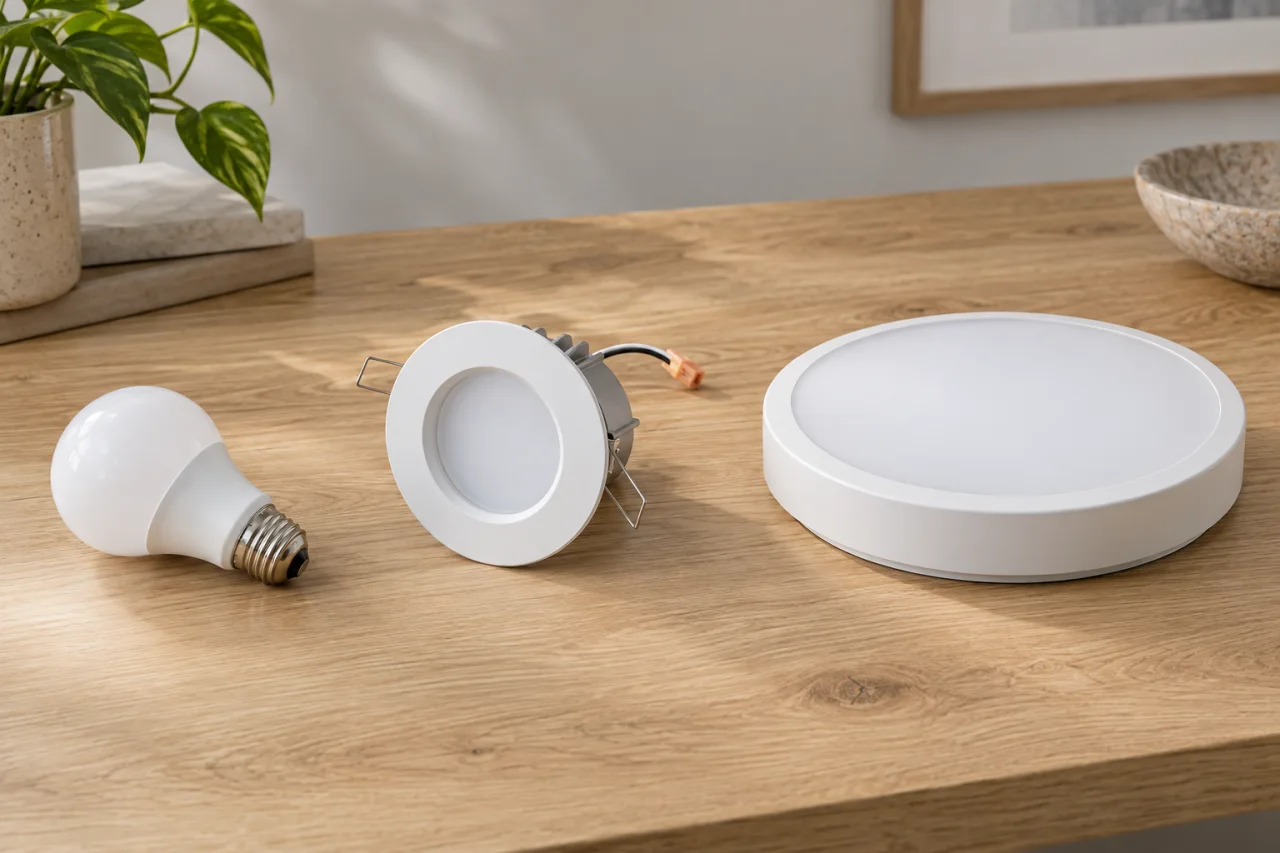
LED Options Guide: Replaceable Bulbs, Retrofit Kits or Integrated Fixtures?
The best LED choice depends on what you want to keep, how the light performs and what happens when a component fails. Compare the practical tradeoffs before buying.
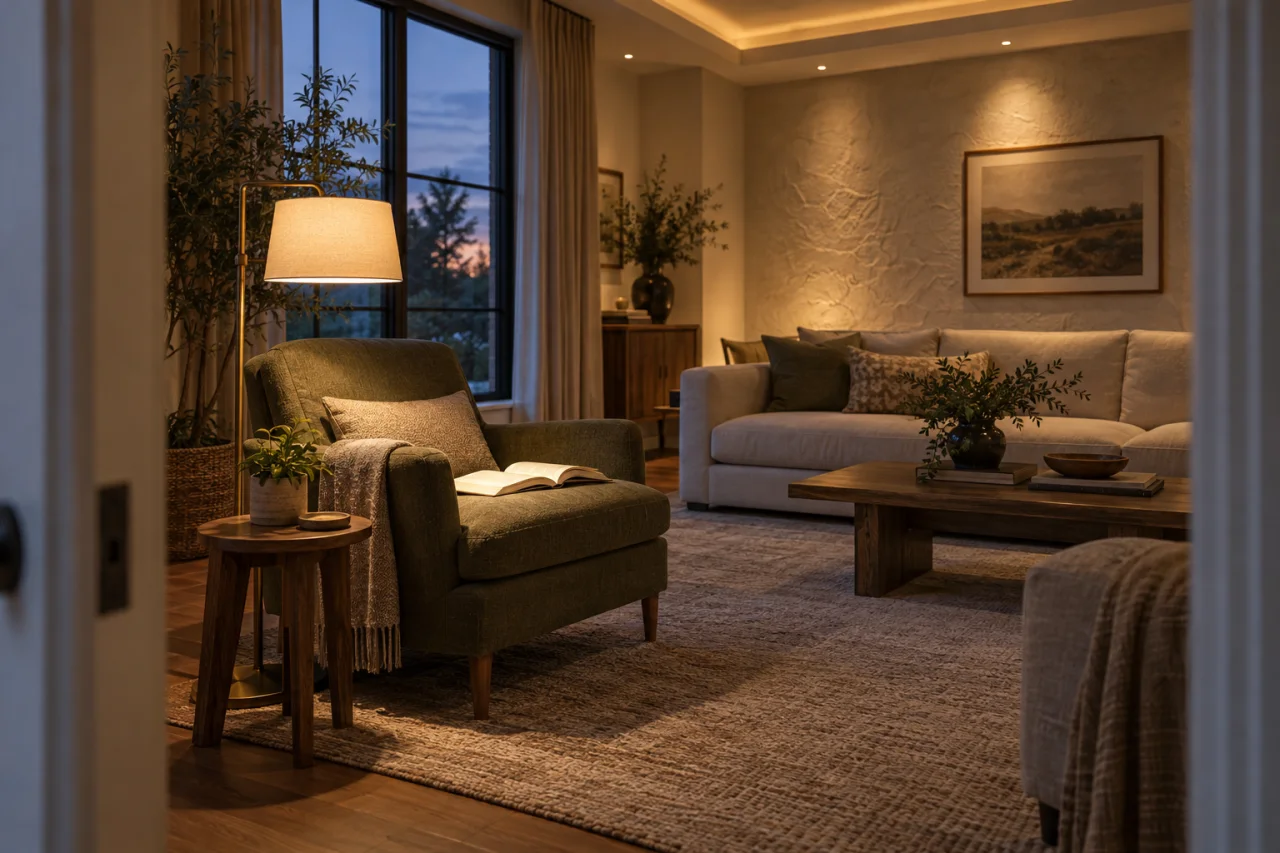
How to Plan Room Lighting Before Choosing Fixtures
A comfortable room needs more than brighter bulbs. Map activities, daylight and furniture, then plan light placement, controls and maintenance before choosing fixtures.
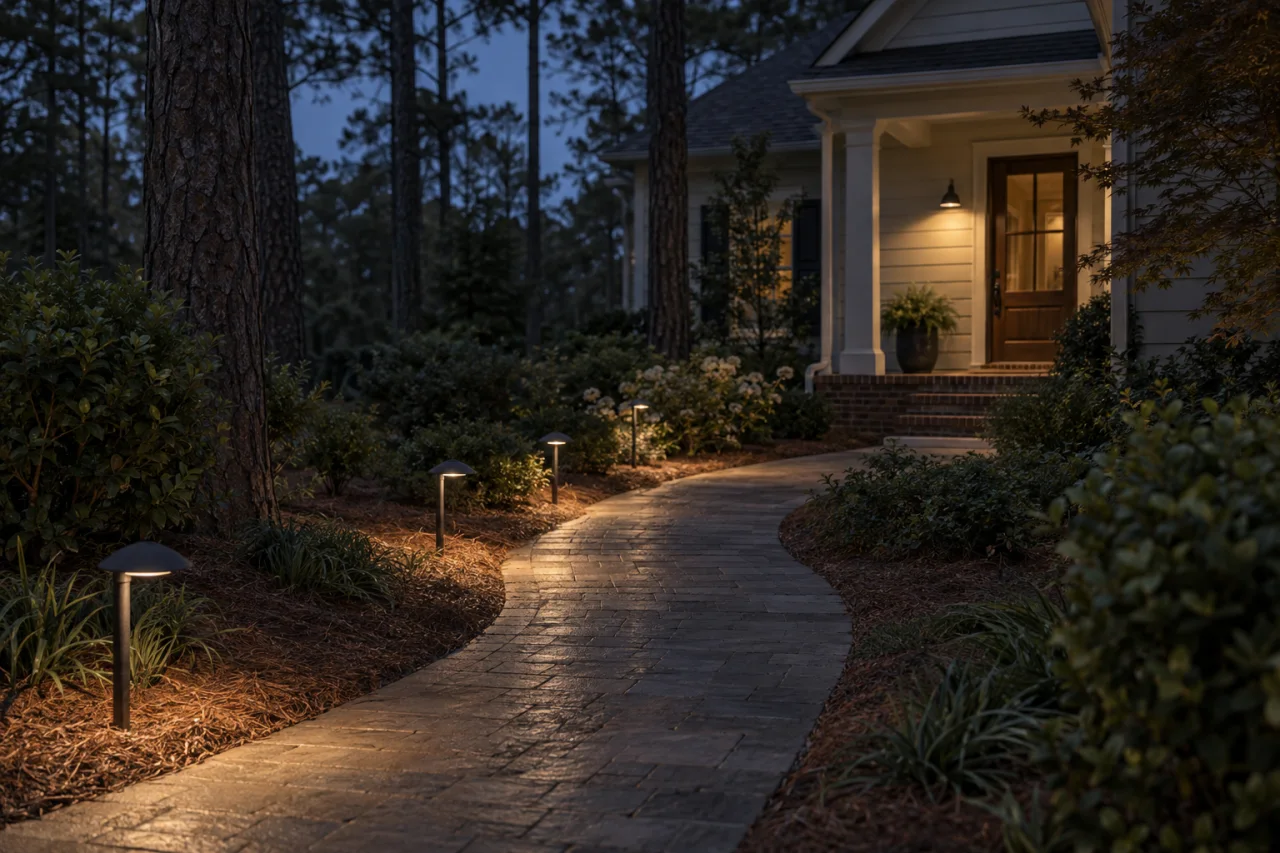
Planning Outdoor Lighting in Moore County: Weather, Glare and Landscape
Useful outdoor lighting starts with the route to the door—not the brightest fixture. Plan for glare, moisture exposure, controls, growing plants and the requirements that apply to your Moore County property.