
Practical guides · process
How to Plan Room Lighting Before Choosing Fixtures
A comfortable room needs more than brighter bulbs. Map activities, daylight and furniture, then plan light placement, controls and maintenance before choosing fixtures.
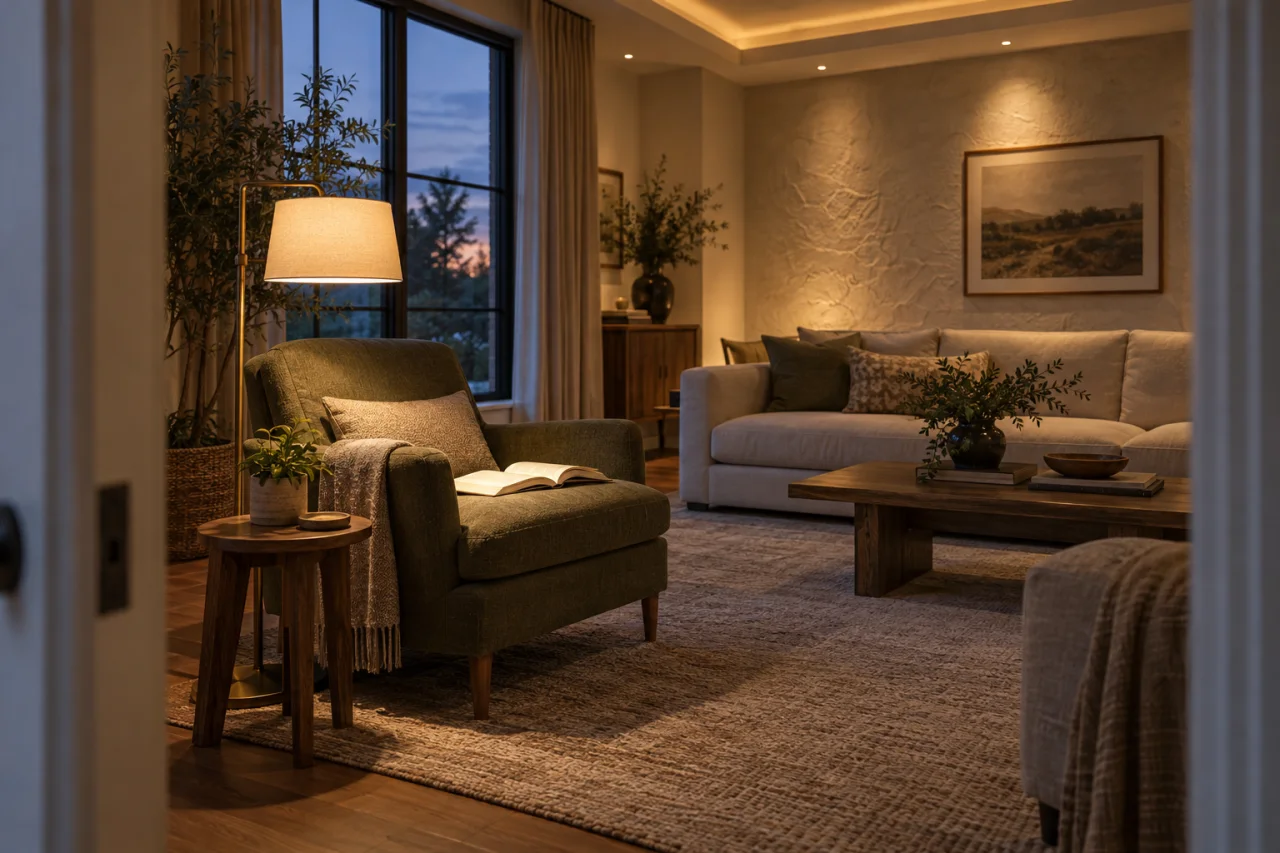
What you’ll learn
- Plan around activities, furniture and work surfaces before choosing fixtures.
- Use ambient, task and accent lighting for different jobs rather than making the entire room brighter.
- Check shadows and glare from normal seated and standing positions.
- Choose controls, light quality and replacement access alongside the fixtures.
A room can have plenty of light and still be uncomfortable to use. The better starting point is where light is needed, how it reaches the task and what else falls within your view—not simply adding output everywhere. Layered lighting supports that more targeted approach. (gsa.gov) This homeowner exercise will help you prepare a practical room brief before choosing fixtures or discussing changes with The Electric Knight.
1. Start with activities, not the ceiling
Before browsing pendants or recessed trims, write down what the room must support: reading, cooking, homework, conversation, television or detailed hobbies. Identify where each activity happens and who uses the space. Natural Resources Canada’s home-lighting guide recommends focusing first on people, then architecture and art. (natural-resources.canada.ca)
Make the description specific. “The living room is dark” gives you less to work with than “I cannot read comfortably in the armchair, but the ceiling light reflects in the television.” List what already works, too, so a proposed change does not solve one problem by creating another.
For a conversation about Lighting with The Electric Knight, bring these observations rather than starting with a shopping list. The goal is to define the result you want before deciding which products belong in the room.
2. Map furniture, surfaces and changing daylight
Sketch the room’s outline, doors, windows, major furniture and work surfaces. Mark the reading chair, kitchen preparation area, desk, mirror or hobby bench. Add existing lights and switches as reference points, not instructions to keep everything where it is.
Next, observe the space during its actual hours of use. Note where daylight helps, where a window becomes uncomfortable and which areas remain dim after sunset. Window position, shading and screen orientation influence glare; daylight should be useful without shining directly into eyes or across reflective work surfaces. (gsa.gov)
Include finishes in your notes. Dark furniture and walls change the lighting picture compared with lighter surfaces. A repaint or new cabinet finish is worth mentioning before a layout is settled. (basc.pnnl.gov)
3. Give each lighting layer a job
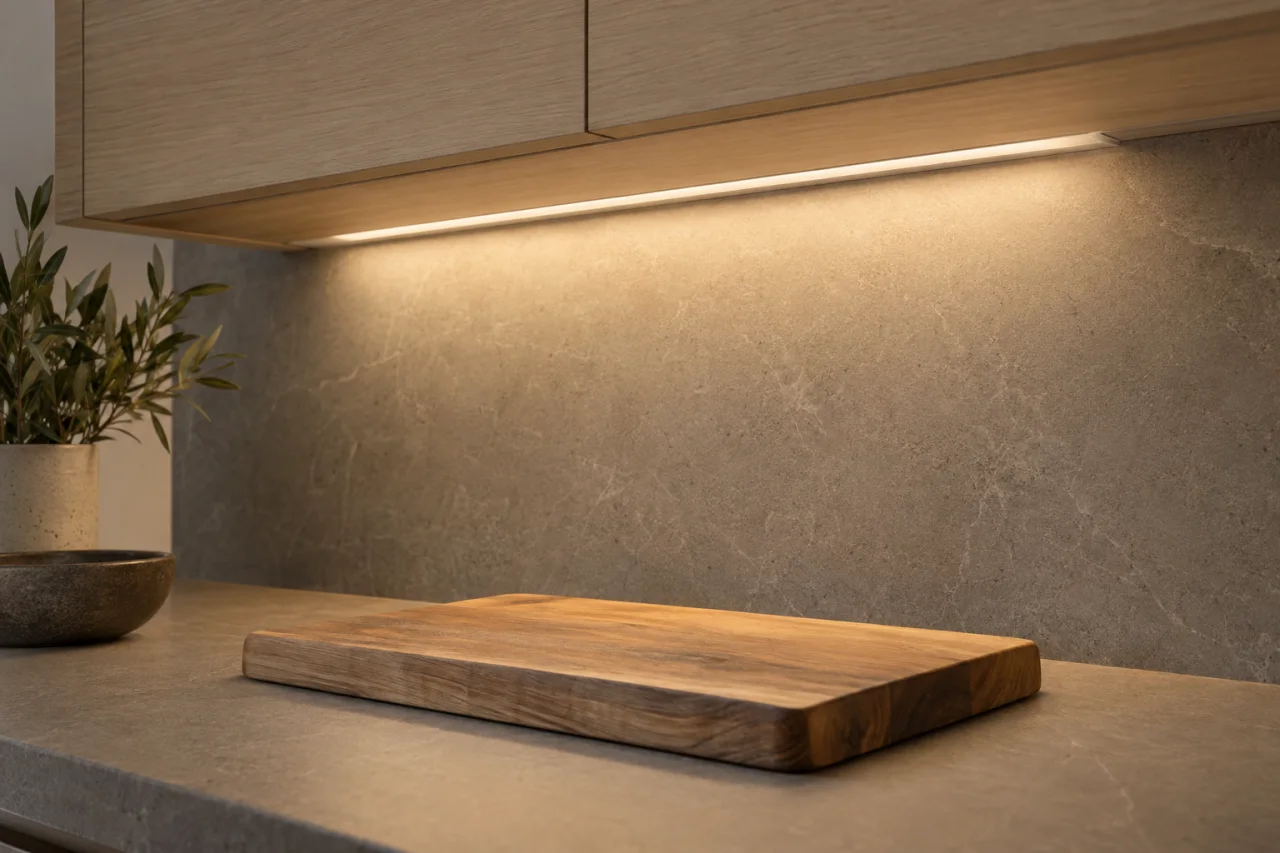
Think of lighting as several jobs rather than one fixture doing everything. Ambient light supports general use; task light serves a particular activity; accent light emphasizes a feature. These layers can work together without needing to operate at full output simultaneously. (natural-resources.canada.ca)
Use the comparison below to identify missing functions, not to require three separate purchases in every room. One fixture may contribute to more than one layer. Decorative appearance is a separate consideration: an attractive pendant still needs a clear purpose in the plan.
Lighting layers: where each helps and where it falls short
| Layer | Best use | Possible approach | Limitation |
|---|---|---|---|
| Ambient | General room illumination | A diffuse ceiling fixture or light reflected from room surfaces | May not deliver enough light to a page or counter |
| Task | Reading, preparation, grooming or detailed work | A reading lamp, desk lamp or under-cabinet light | Needs placement that avoids glare and distracting shadows |
| Accent | Emphasizing artwork, texture or an architectural feature | An aimed light highlighting a selected surface | Does not replace general or task illumination |
4. Place light in relation to the task
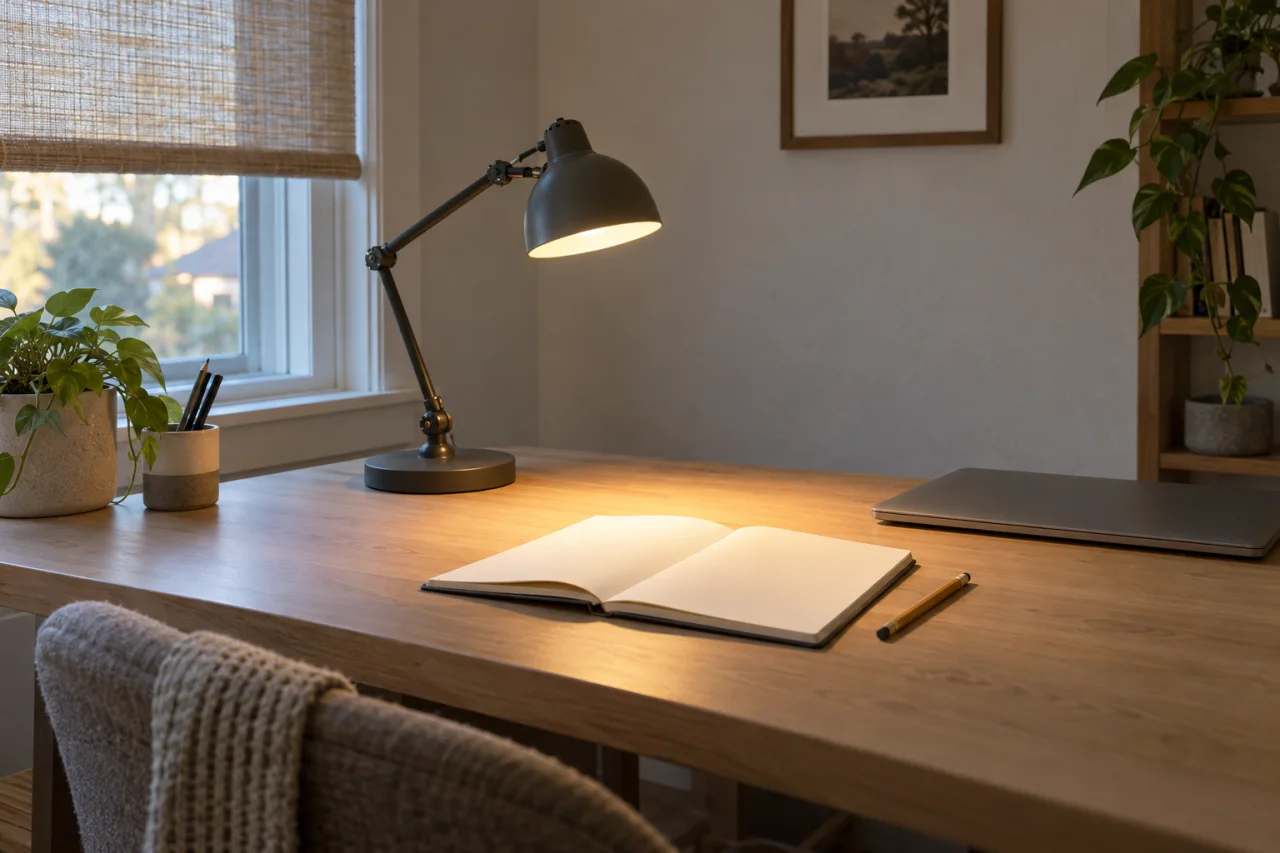
Consider where light must land before choosing where a fixture looks symmetrical. Fixed task lighting suits work surfaces that stay put; movable lamps are useful where seating or activities may change. Beam spread and distance also affect how much of a surface receives light. (yourhome.gov.au)
Try an existing adjustable lamp at a desk or reading chair. Sit normally, handle the book or tools you use, and note whether your hand or body blocks the light. Treat this as an observation exercise, not a substitute for a lighting calculation.
For permanent fixtures, ask how the proposed position relates to the work surface and normal viewing direction. Room dimensions, ceiling height, finishes and the fixture’s distribution affect the layout; a universal spacing formula cannot account for all of them. (energystar.gov)
5. Check glare from seated and standing positions
Look from the positions people actually occupy: seated at the table, reclining on the sofa and standing at the counter. Can you see a harsh source directly? Does a bright reflection appear on the screen or worktop? Glare involves excessive brightness in the field of view, not simply insufficient room light. Shading and glare control belong in the plan alongside light output. (gsa.gov)
Ask about shielding, diffusers, aiming or a different fixture position before assuming a brighter bulb is the answer. For older household members, additional task illumination may help, but the Lighting Research Center also stresses reducing glare and avoiding abrupt differences between adjacent spaces. (lrc.rpi.edu)
Record the viewing position that causes trouble. “Bright reflection from the sofa’s left seat” is a useful detail to bring to the discussion.
6. Plan controls around everyday situations
Describe a few ordinary lighting situations: preparing dinner, eating, reading and watching television. Then identify which layers each situation needs. Separately controlled lighting elements let you use the light required for the activity instead of switching everything on together. (yourhome.gov.au)
Ask which groups should switch separately and which should dim. If sensors are proposed, discuss the room’s actual use, detection area and adjustment needs. Control selection and placement affect performance, and compatibility with the lighting equipment must be confirmed. (www1.eere.energy.gov)
Do not assume an existing dimmer is suitable for a new LED selection. For troubleshooting context, read Why Do LED Lights Flicker, Buzz or Refuse to Dim Properly? Include preferred control locations and whether everyone in the household can use them comfortably in your room brief.
7. Choose light quality and maintenance access together
Once the lighting jobs are clear, compare products. Lumens describe light output; watts describe energy use. The Lighting Facts label also identifies warm-to-cool appearance, so compare brightness and color separately rather than choosing by wattage alone. (consumer.ftc.gov)
If possible, try one candidate light in the room before repeating it throughout the space. Natural Resources Canada recommends testing uncertain lamp or fixture choices first. (natural-resources.canada.ca)
Discuss LED Lighting with replacement access in mind. Ask what is replaceable, how maintenance is handled and whether compatible replacement components are available. The LED Options Guide provides a useful next comparison between replaceable bulbs, retrofit kits and integrated fixtures. Keep product details for future reference: LED output can decrease over time, making a later mismatch worth considering rather than assuming every light will remain identical. (basc.pnnl.gov)
8. Bring a room brief, not just fixture photos
Bring a simple sketch, your observations and the checklist below to the lighting conversation. Photos can help explain the layout, but also describe what feels uncomfortable from the position where you use the room.
Ask for the proposed scope to distinguish fixtures, controls and any wiring changes, along with access requirements and responsibility for surface repairs. Keep essential improvements separate from optional decorative additions so you can compare proposals on the same basis.
The Electric Knight provides Lighting and LED Lighting for homes and businesses in West End and Moore County. A clear room brief gives that conversation a practical starting point: the activities to support, the conditions to work around and the decisions still to make.
- Room and activities: what happens here, where and at what time of day?
- Layout: furniture, work surfaces, windows and changes already planned.
- Current problems: shadows, direct glare, reflections or hard-to-use controls.
- Lighting priorities: essential task needs first, optional accents second.
- Controls: desired groups, dimming preferences and convenient operating locations.
- Project questions: proposed placement, equipment compatibility, access and replacement needs.
Questions & answers
Should I choose fixtures or arrange the furniture first?
Establish the main furniture and activity locations first, even if the arrangement is provisional. A reading light needs a relationship to the chair and page, not just the room’s center. Portable lamps offer flexibility where furniture may move. (yourhome.gov.au)
How many recessed lights does my room need?
There is no useful universal count or spacing rule for every room. Dimensions, ceiling height, surface finishes, fixture distribution and the activities being lit all matter. Ask for a layout tied to those conditions rather than a ceiling grid alone. (energystar.gov)
Will cooler-colored bulbs make the room brighter?
Color temperature describes whether light looks warmer or cooler; lumens describe light output. Compare both separately. Choosing a cooler appearance does not replace providing enough well-directed light at the task. (consumer.ftc.gov)
Can a dimmer fix uncomfortable lighting?
Dimming adjusts output, but a poorly positioned source can still produce glare or reflections. Consider shielding and placement as well as brightness, and have compatibility between the light and control confirmed. (www1.eere.energy.gov)
What should change when someone needs more light for reading?
Consider adjustable task lighting with a shielded or diffused source rather than brightening everything. The Lighting Research Center emphasizes task illumination, glare reduction and balanced light levels for older adults. Individual comfort should guide the discussion. (lrc.rpi.edu)
Sources & further reading
- Natural Resources Canada — Home Lighting Design Guide Pocket Book
People-first residential planning, lighting layers, independent operation and testing a candidate lamp or fixture before wider use.
- Australian Government Your Home — Lighting
Residential task lighting, movable versus fixed sources, beam coverage, separate switching and avoiding glare and shadows. Used for general design principles, not Australian installation requirements.
- U.S. General Services Administration — Lighting
Daylight, shading, viewing conditions and glare-control principles. Workplace guidance is used only for broadly applicable visual-comfort concepts.
- U.S. Environmental Protection Agency — ENERGY STAR Building Manual, Chapter 6: Lighting
Influence of room dimensions, ceiling height and finishes, and the distinction between task illumination and uniform whole-room lighting.
- U.S. Department of Energy — Energy Effective Lighting Checklist
Control compatibility, sensor placement, task lighting and glare considerations. Older equipment recommendations and commercial fixture-spacing examples are not applied to homes.
- Federal Trade Commission — Shopping for Light Bulbs
Lumens versus watts and the Lighting Facts label’s brightness and warm-to-cool appearance information.
- Pacific Northwest National Laboratory — High-Efficiency Lighting
Effects of interior surface colors, LED light-output depreciation and possible color changes over time.
- Lighting Research Center, Rensselaer Polytechnic Institute — Lighting for Senior Care
Task illumination, shielding or diffusing sources, glare reduction and balanced transitional lighting for older adults.
Prepared and automatically checked on . Conditions, costs and requirements can change. Ask about the details that apply to your situation.
Continue reading
Helpful next reads
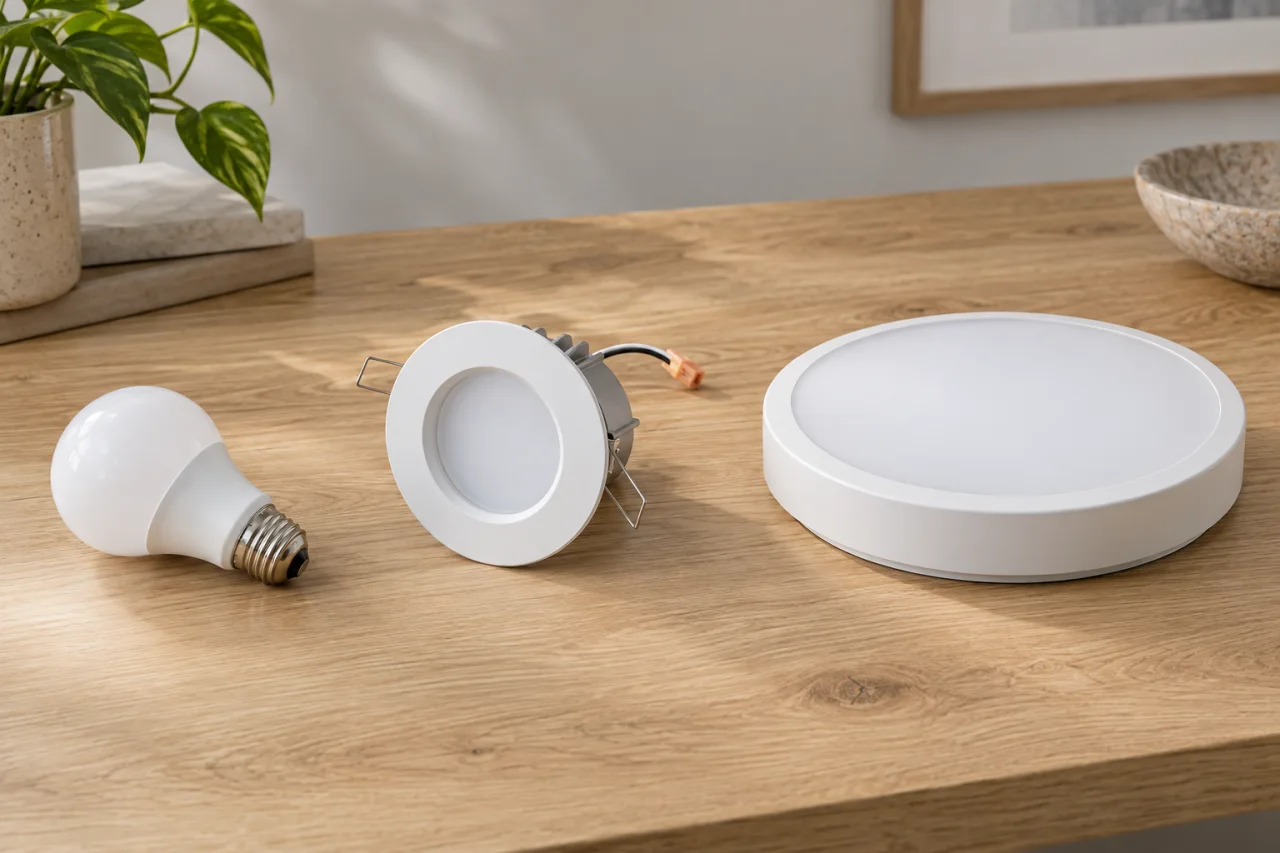
LED Options Guide: Replaceable Bulbs, Retrofit Kits or Integrated Fixtures?
The best LED choice depends on what you want to keep, how the light performs and what happens when a component fails. Compare the practical tradeoffs before buying.
Planning Outdoor Lighting in Moore County: Weather, Glare and Landscape
Useful outdoor lighting starts with the route to the door—not the brightest fixture. Plan for glare, moisture exposure, controls, growing plants and the requirements that apply to your Moore County property.
Why Do LED Lights Flicker, Buzz or Refuse to Dim Properly?
LED flicker and buzzing can reflect a bulb–dimmer mismatch, but symptoms alone cannot rule out an electrical fault. Learn what to record, what compatibility means and when to stop troubleshooting.