Practical guides · cost
What Affects the Cost of Whole-House Surge Protection?
The device is only part of the cost. Learn how panel compatibility, mounting location, electrical configuration, related corrections and warranty terms shape a whole-house surge protection estimate.
What you’ll learn
- Compare complete installed scopes, including connection requirements, mounting materials and separately identified corrections.
- Panel compatibility, usable space and service configuration can matter more than the device's advertised size.
- Evaluate voltage protection, surge-duty and fault-current ratings together rather than choosing by one headline number.
- Ask how to observe device status, what replacement entails and which warranty conditions apply.
Two whole-house surge protection estimates can look similar while covering different work. One may include a straightforward device connection; another may account for limited panel space, a different mounting arrangement or electrical corrections. For homeowners in West End and Moore County, the useful comparison is not simply which device has the biggest rating or lowest purchase price. It is whether the proposed equipment fits the electrical system, what the installation includes and what ownership will require afterward. Use these questions when reviewing Surge Protection options and written estimates.
Compare the installed scope, not the box price
Start with the proposed device model and installation location, not just the total. An equipment-only price leaves out the connection method, mounting materials and labor needed to make that particular device suitable for your home.
For a useful comparison, ask each estimate to identify the device, required breaker or panel spaces, mounting arrangement and any related corrections. Also ask whether permit or inspection charges, wall repairs and removal of existing equipment are included, excluded or subject to assessment.
Separate the base installation from optional additions. Additional point-of-use protection or work at another panel should have an explanation, rather than appearing as an unexplained upgrade package. A higher total may reflect more work, but the written scope should make that difference understandable.
Panel compatibility can change the equipment and labor
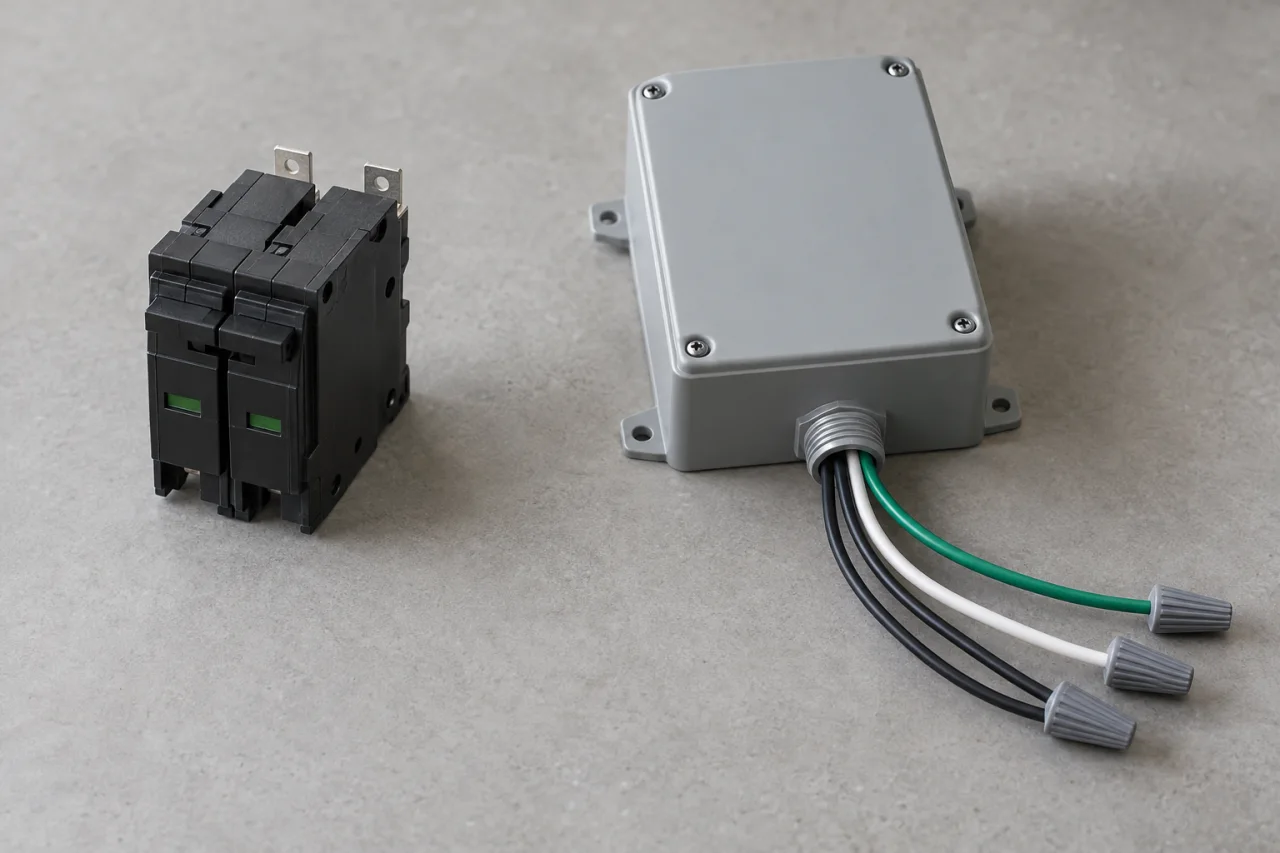
A surge protective device must suit the electrical system and its intended connection. An internal plug-on device may require a particular panel family or neutral arrangement. An external hardwired device may accommodate more panel brands, but that does not eliminate breaker, voltage or installation requirements.
Space requirements differ, too. Some products occupy panel positions without a separate breaker; others connect through a specified breaker. An external enclosure therefore does not necessarily solve a full-panel problem.
Ask what makes the proposed model compatible with your equipment and what alternatives exist if space is limited. Do not assume that a panel replacement is necessary simply because the first device considered will not fit. If broader work is proposed, panel upgrade planning can help you distinguish the surge-protection installation from a separate improvement.
Common installation formats: applicability depends on the exact product and electrical equipment.
| Format | When it may fit | What limits the comparison |
|---|---|---|
| Internal panel-insert device | A listed product matches the panel family and required connection arrangement. | Panel positions and model-specific compatibility can limit the choice. |
| External hardwired device | An adjacent mounting location and suitable electrical connection are available. | May still require breaker space, mounting accessories and an appropriate enclosure. |
| Combined breaker and surge device | The manufacturer offers a compatible combination for the panel. | Breaker function, panel family and device ratings must all suit the application. |
Location and access affect the installation
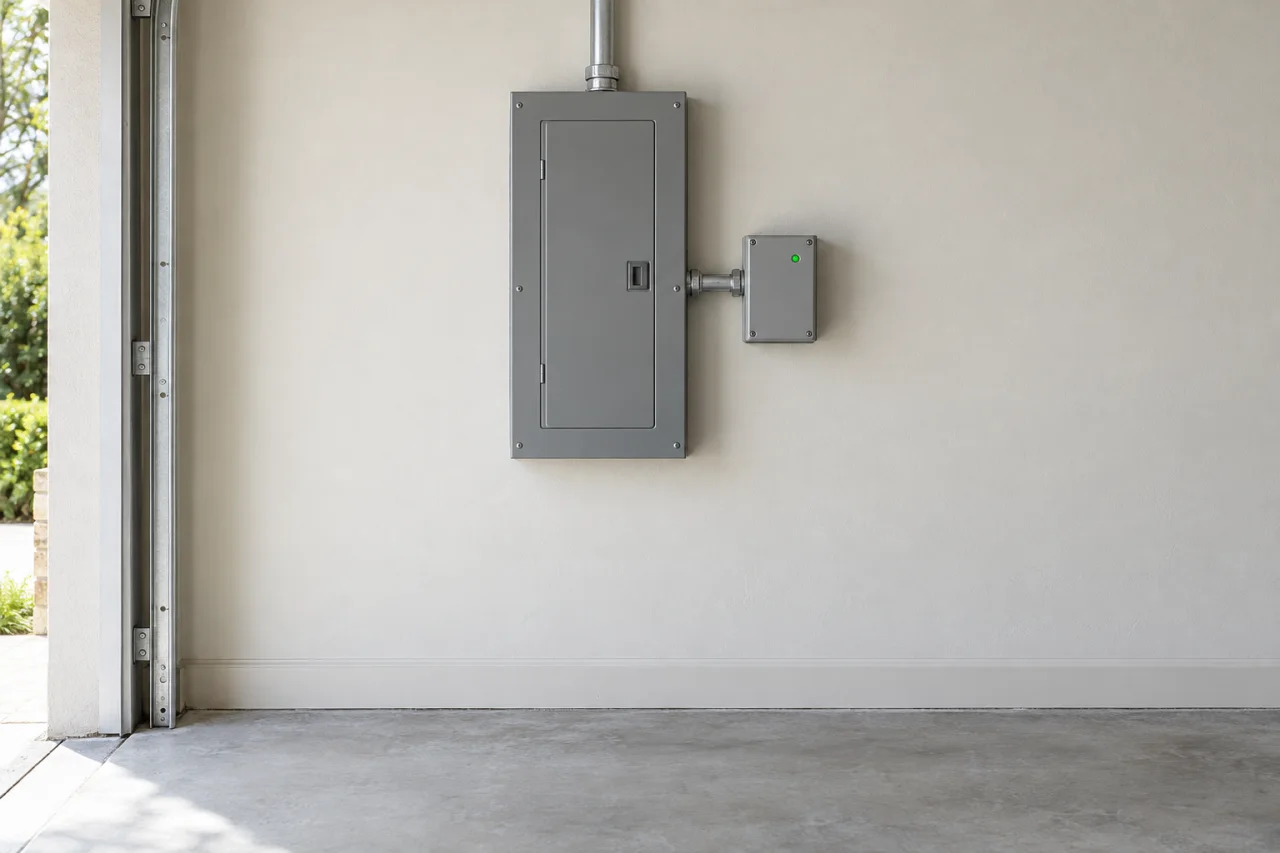
Mounting location affects more than appearance. For hardwired devices, the connecting leads influence performance. Short, direct connections are important; placing a unit farther away for a tidier-looking wall can create an unfavorable wiring route.
A flush-mounted panel may require a different mounting solution from a surface-mounted panel. Finished walls, limited adjacent space and indoor versus outdoor exposure can change the accessories or enclosure needed. Ask where the unit will sit, how its indicator will remain visible and whether the estimate includes any finish restoration.
Clear stored belongings from the work area before the appointment, but leave electrical covers and connections alone. Installation and internal assessment belong to qualified electrical personnel. A homeowner should not open equipment to measure available space or trace a proposed connection.
Service configuration determines what the proposal addresses
A home with one service panel presents different planning questions from a property with an outdoor disconnect, indoor distribution panel, detached-building feeder or generator transfer equipment. Tell the electrician about these features rather than assuming that one mounting point describes the entire system.
Device type identifies permitted installation locations, not a simple quality ranking. Type 1 devices can be suitable on either side of the service disconnect's overcurrent protection, subject to their instructions. Type 2 devices belong on the load side. Neither description tells you, by itself, whether another panel needs additional protection.
Ask which equipment and circuits the proposal addresses and why that location was selected. If the recommendation includes multiple devices, request the purpose of each. Comparing whole-house surge protection, plug-in protectors and UPS units can also help separate panel-level protection from protection at individual electronics.
Read ratings together, not as a single score
A prominent kA number is not a complete measure of protection. Maximum surge current, nominal discharge current and short-circuit current rating describe different things; they should not be treated as interchangeable.
Voltage protection rating, or VPR, describes the limiting voltage measured under standardized surge testing. A lower value can be useful when comparing otherwise comparable devices and protection modes, but it is not a promise of the voltage every appliance will experience during every event.
Nominal discharge current describes standardized repeated-surge duty. Maximum continuous operating voltage describes the voltage that can be continuously applied. Short-circuit current rating concerns suitability under fault-current conditions, not how much surge energy reaches a television. Ask for the model's data sheet and an explanation of the ratings that matter for your installation.
- Application voltage and maximum continuous operating voltage: do they suit this electrical system?
- Voltage protection rating: are comparisons for the same protection mode, such as line-to-neutral?
- Nominal discharge current: what standardized surge-duty rating is listed?
- Short-circuit current rating: is it suitable for the available fault current at the connection?
- Listing: is the proposed assembly a listed surge protective device rather than a component needing additional evaluation?
Include status checks and future replacement in the decision
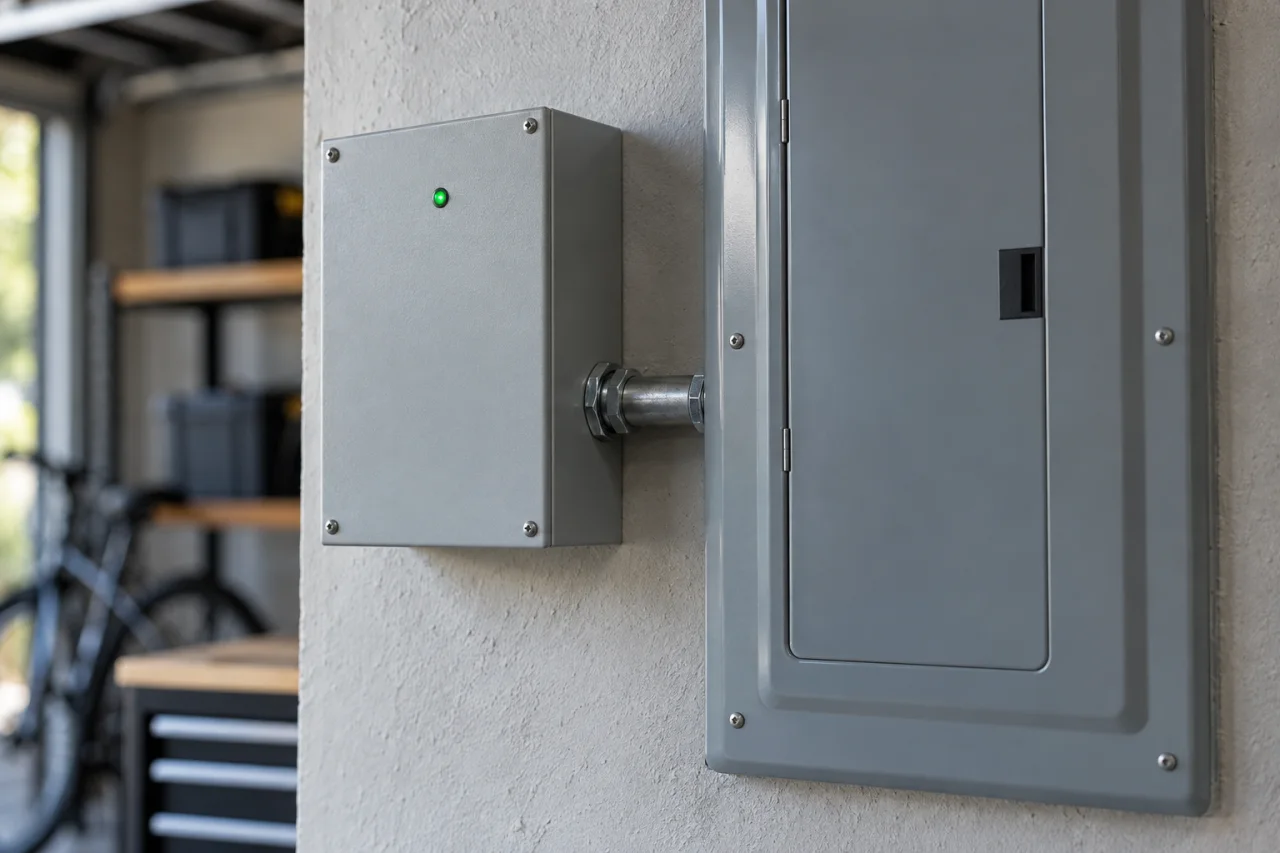
Ask how the exact model communicates normal operation and loss of protection. An indicator is useful only if you can observe it and know what it means. A dark light may require a professional to distinguish a supply problem from a failed device.
Replacement provisions also affect future cost. Does the model require replacement of the whole unit? Who pays for diagnosis, removal and reinstallation? Ask these questions even when a product warranty is described as long-term; do not assume it includes labor.
Keep the model information, installation invoice and instructions together. Follow the manufacturer's observation and replacement guidance rather than treating a warranty period as a guaranteed service life. The guide to surge protector indicators and replacement explains the distinction between observing an indicator and diagnosing an electrical problem.
Read warranty conditions before approving the work
A product warranty and a connected-equipment warranty cover different questions. Neither should be treated as an insurance policy or a guarantee that every damaged appliance will be reimbursed.
Read the terms for the exact model. Ask about qualifying events, exclusions, limits, proof of purchase, installation requirements and notification deadlines. One manufacturer's published claims procedure requires an independent diagnostic report, insurance-claim documentation and notification before repairs. The headline coverage amount alone does not explain those obligations.
For a Moore County home, the next useful step is an assessment tied to the actual electrical equipment. The Electric Knight offers Surge Protection in West End and surrounding communities. Discuss what you have observed, arrange an appropriate assessment and review the proposed work before proceeding. A clear estimate should explain what is being installed, what else is needed and what remains outside the scope.
- Identify the exact model, listing and intended connection location.
- Confirm breaker requirements, panel-space needs and mounting materials.
- Separate required corrections, optional protection and finish repairs.
- Ask how status indications and replacement requirements will be explained.
- Obtain the product warranty and connected-equipment terms before choosing.
Questions & answers
Does a full electrical panel automatically mean I need a panel replacement?
No. A full panel changes the options, but it does not establish that replacement is necessary. Some devices need panel spaces, while external units may still need a compatible breaker connection. Ask the electrician to explain the permitted alternatives and separate any panel work from the surge-device installation.
Is the device with the highest kA number always the best choice?
No. Confirm whether the number describes maximum surge current, nominal discharge current or short-circuit current rating. These describe different characteristics. Compare application voltage, protection modes, voltage protection ratings, listing and installation requirements as well.
Will whole-house surge protection replace my plug-in protectors?
Not necessarily. Panel protection and point-of-use protection can be complementary. Manufacturer guidance recommends point-of-use protection for sensitive electronics even when a whole-house device is installed. Ask which layers are included in the estimate.
Does a connected-equipment warranty automatically pay for damaged appliances?
No. Eligibility depends on the specific warranty, installation conditions, exclusions and claim requirements. A claim may require purchase records, independent diagnostics, insurance documentation and manufacturer notification before repairs. A connected-equipment warranty is not homeowners insurance.
What should I do if the status light goes out?
Consult the instructions for that exact model and arrange qualified electrical service if indicated. A dark indicator may involve loss of power or loss of suppression; it does not identify the cause by itself. Do not remove electrical covers or test internal connections.
Sources & further reading
- Eaton: Residential surge protection during storms
Manufacturer comparison of internal, external and combined breaker/surge formats; panel-family restrictions; breaker and space requirements; external mounting and flush-mount accessories.
- Schneider Electric: Whole Home Surge Protection
Residential panel-level protection, internal plug-on-neutral and external device options, status indicators and the existence of model-dependent connected-equipment warranties.
- NEMA Surge Protection Institute: Correct Installation of Hard-Wired Surge Protective Device
Manufacturer instructions govern installation; grounding and bonding matter; lead length and routing affect installed performance. Its example installation is not treated as a universal procedure.
- UL: Guidelines for Surge Protective Devices Used in Industrial Control Panels
Definitions of Type 1 and Type 2 installation locations, nominal discharge current and maximum continuous operating voltage. Used for terminology, not as residential installation instructions.
- NEMA Surge Protection Institute: Safety-Related Information
Voltage protection rating, repeated-surge nominal discharge testing, short-circuit current rating, coordination with available fault current and the distinction between listed devices and recognized components.
- Schneider Electric: Are HEPD Devices Considered a Whole House Surge Protective Device?
Manufacturer guidance recommending point-of-use protection for sensitive electronics in addition to whole-house protection.
- Schneider Electric: HEPD Connected-Equipment Warranty Claims Procedure
HEPD connected-equipment claim requirements including purchase records, independent diagnostics, insurance documentation and notification before repairs; illustrates why warranty conditions require review.
- Schneider Electric: HEPD Instruction Bulletin 8291-0201A, December 2011
Manufacturer safety requirements for qualified installation and service; model-specific voltage compatibility, short lead routing, status-light interpretation and replacement after professional verification. This older bulletin is used as an example, not as instructions for every current model.
Prepared and automatically checked on . Conditions, costs and requirements can change. Ask about the details that apply to your situation.
Continue reading
Helpful next reads
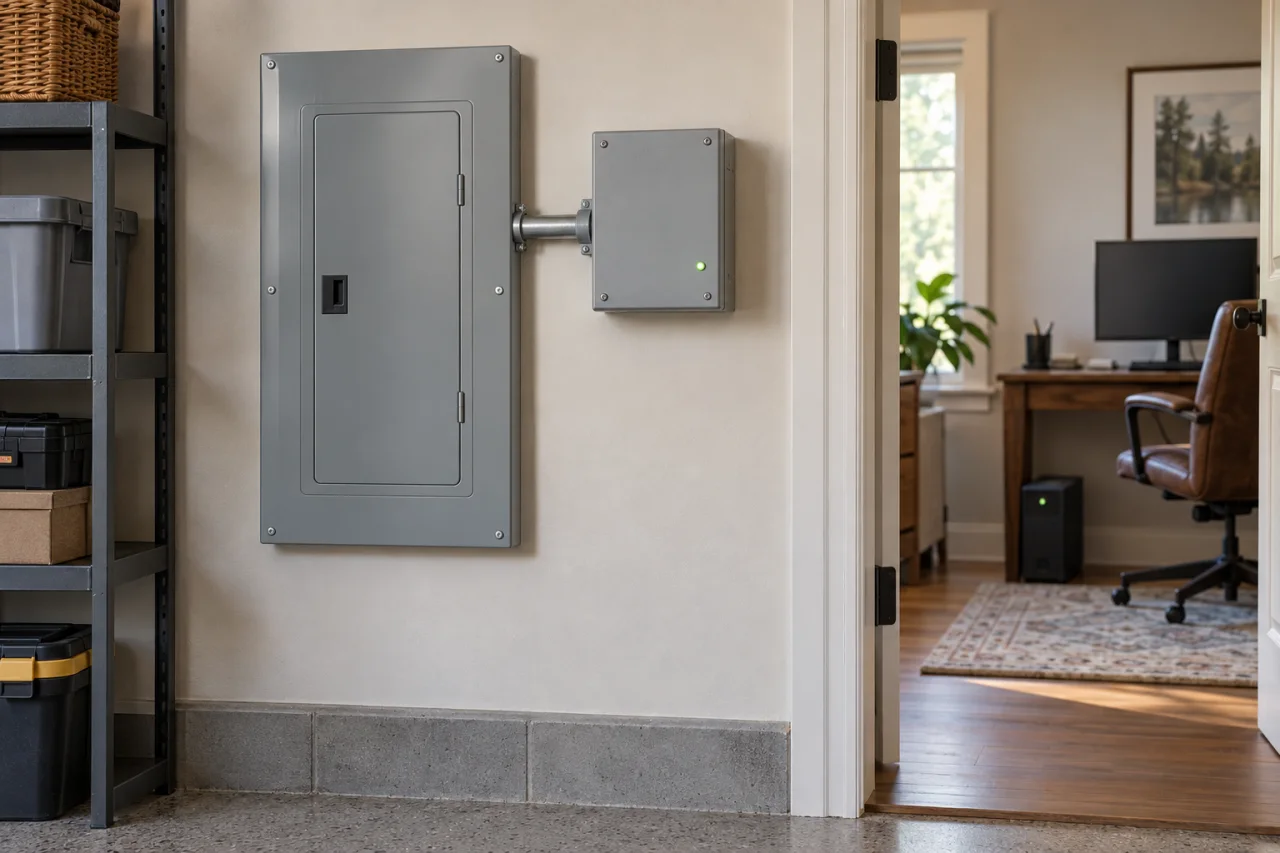
Whole-House Surge Protection, Plug-In Protectors and UPS Units Compared
Surge protection limits brief voltage spikes. A UPS supplies temporary battery power. Compare where each option acts, what it cannot do and when a combination makes sense.
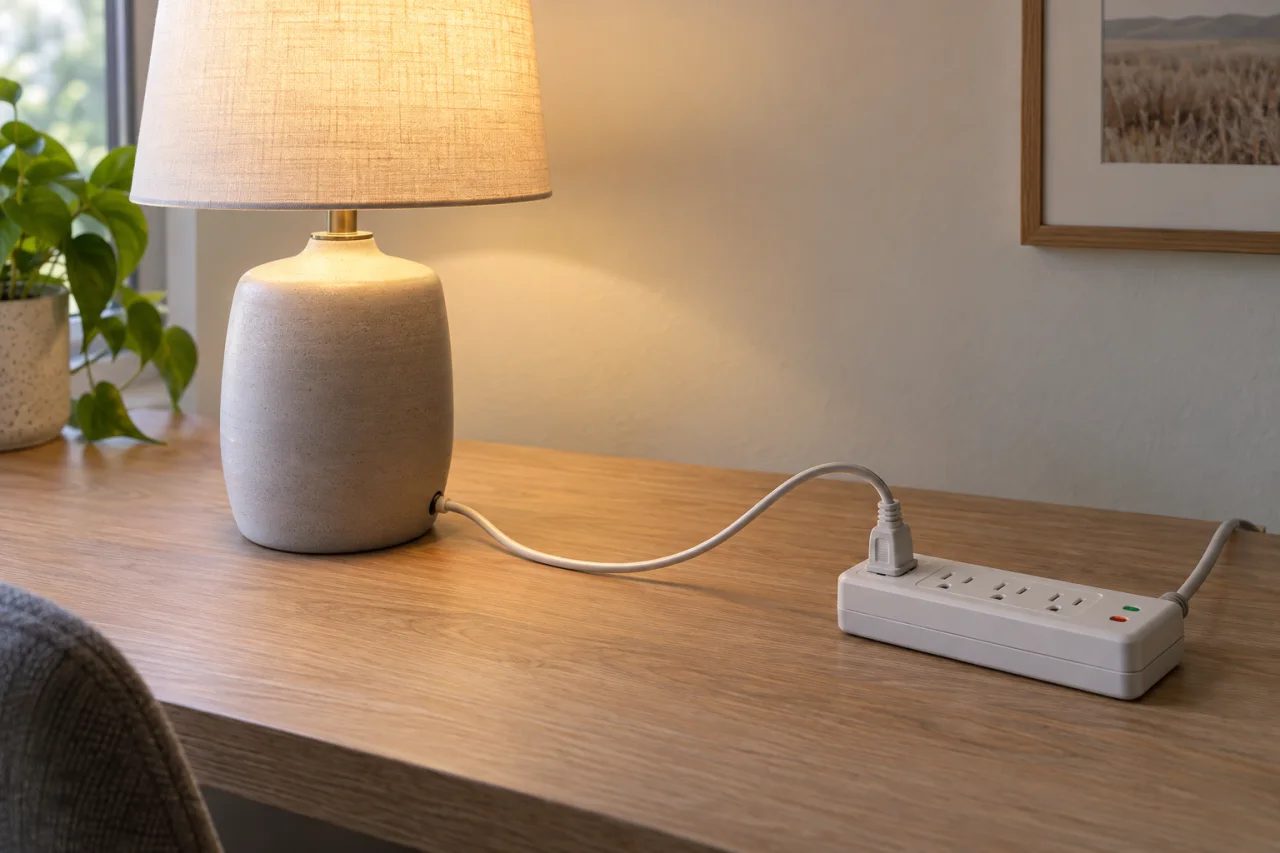
Is Your Surge Protector Still Working? Indicators and Replacement Questions
A glowing power switch is not proof of surge protection. Learn how to read model-specific indicators, recognize replacement questions and keep observations safe.