Practical guides · maintenance
Generator Readiness: Maintenance Records, Warning Signs and Safe Limits
A running engine is only part of generator readiness. Learn how to track maintenance and operating hours, preserve fault information and recognize when safe observation should give way to qualified service or emergency help.
What you’ll learn
- Use the exact model’s maintenance instructions, tracking both calendar deadlines and engine operating hours.
- A successful exercise cycle may not test household load transfer or performance under the intended loads.
- Record complete fault messages and symptoms; repeated resets do not resolve an underlying problem.
- Fuel storage and safe portable-generator placement belong in the readiness plan.
- CO alarms, suspected poisoning, fire signs and electric shock require emergency action—not a routine service enquiry.
A generator that starts on schedule can still leave important questions unanswered. Was maintenance completed at the right operating-hour threshold? Did the exercise cycle transfer any household loads? Has a warning returned since the last service visit? For homeowners in West End and Moore County, useful readiness tracking combines the correct manual, a clear operating record and firm safety limits. The aim is not to troubleshoot live equipment yourself. It is to know what has been verified, what remains uncertain and when to ask for qualified help.
Start with the equipment you actually own
Begin with the manufacturer, model, serial number and fuel type. Keep the matching owner’s manual with service receipts and any installation or transfer-switch documentation you already have. A similar-looking generator may have different maintenance requirements, controls or engine components.
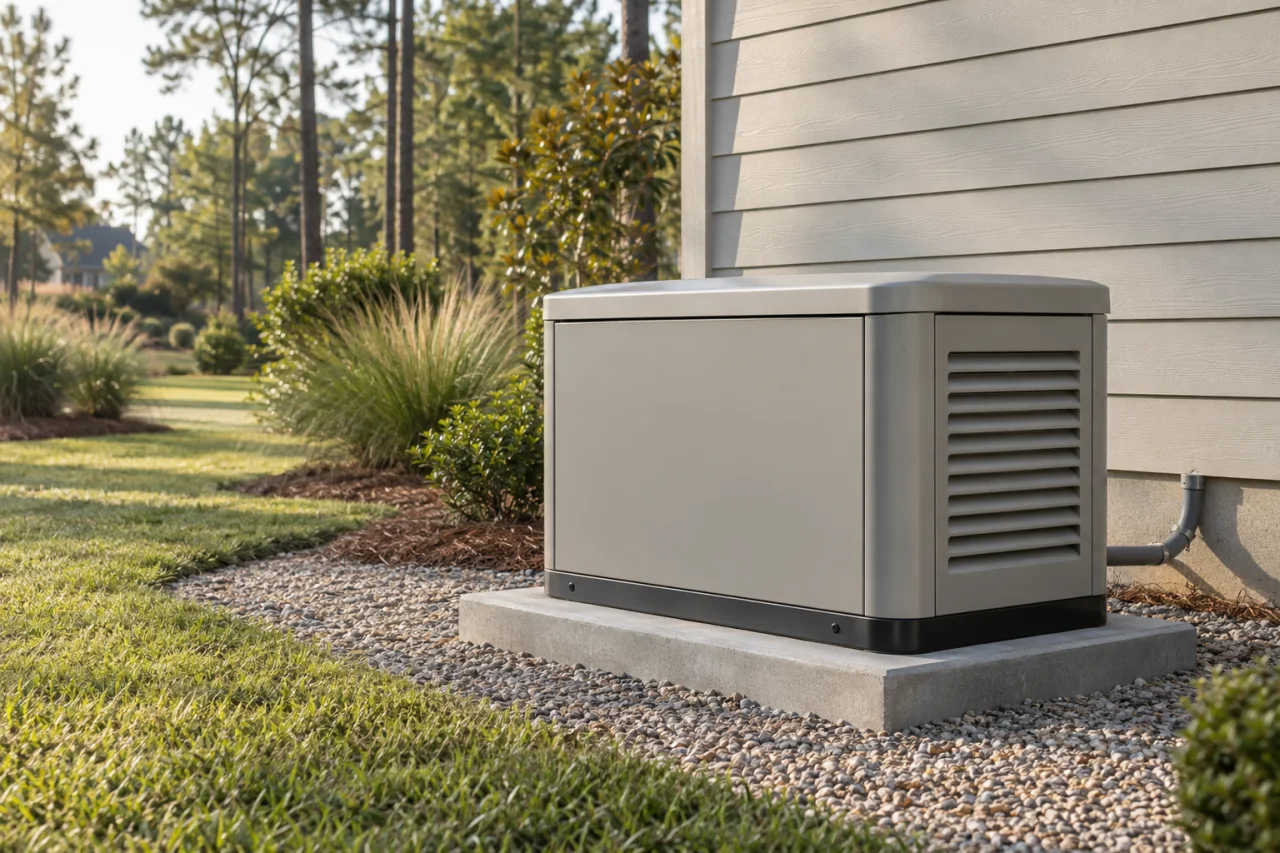
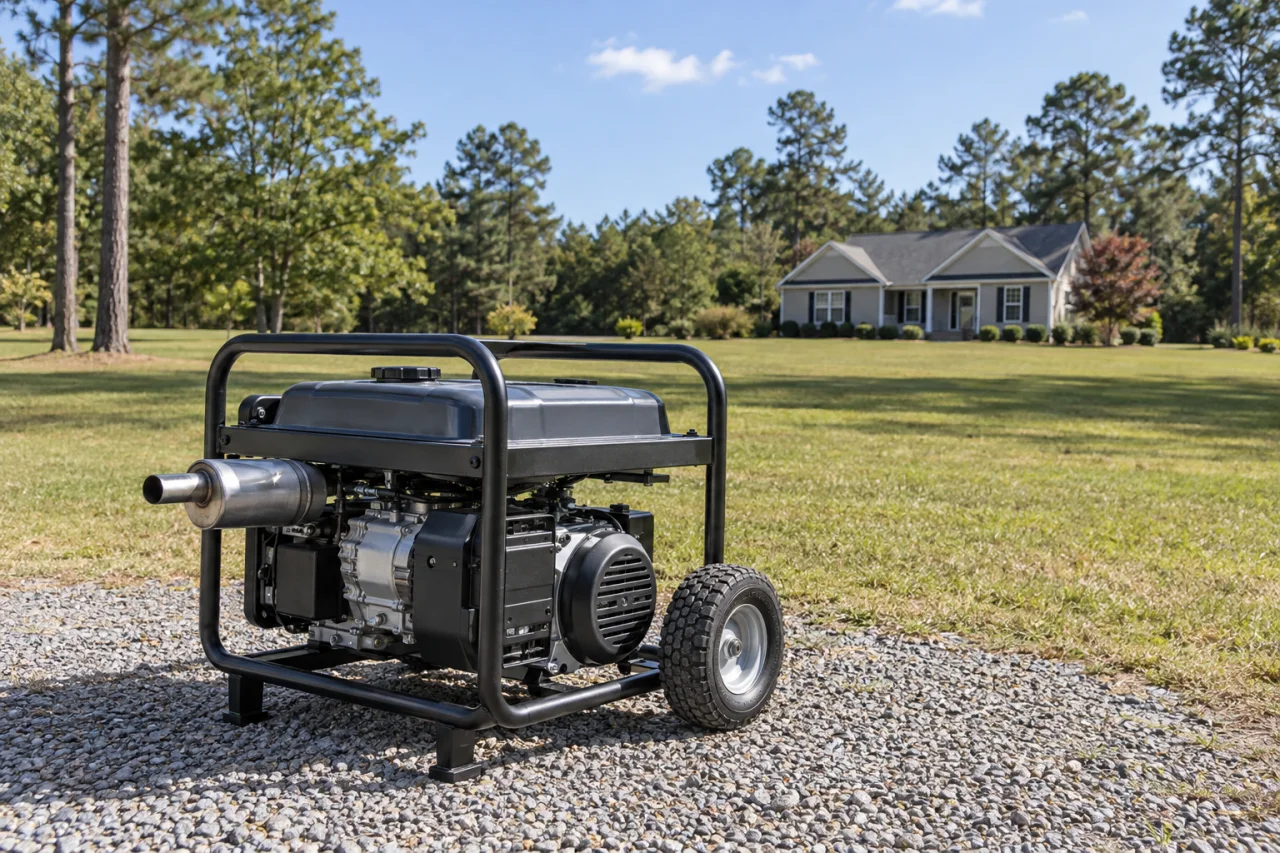
Portable and permanently installed standby equipment need different readiness plans. A portable unit requires a safe outdoor operating location, suitable connections and a fuel-storage plan. A standby unit adds automatic controls and transfer equipment that must work together. Review portable and standby generator tradeoffs if you are unsure what your setup can support.
Do not borrow another owner’s service interval because the brand or advertised output matches. The correct manual—not an online rule of thumb—should define the schedule and the boundary between owner tasks and qualified service.
Build a record that connects dates, hours and symptoms
A useful readiness record answers three questions: what happened, what was done and what is due next. A notebook or simple digital file is enough. Keep it accessible to another household member rather than relying on one person’s memory.
Confirm that the number you record represents engine runtime. Some controllers distinguish operating hours from other counters, including hours of protection; those figures are not interchangeable.
After an extended outage, update the record before returning to your usual calendar reminders. A generator may reach an hour-based service threshold well before its next scheduled date. If you inherited equipment without records, identify the history as unknown and ask what assessment is appropriate rather than assuming maintenance is current.
- Record the date and actual engine operating-hour reading, using the method identified in the manual.
- Describe the event: scheduled exercise, outage operation, service visit or return from storage.
- Copy the complete fault message or warning, including its code, before any permitted reset.
- Save completed service details, parts and fluids used, and the operating-hour reading at service.
- Track the next calendar deadline and operating-hour threshold separately.
- Keep unresolved symptoms visible rather than treating a cleared reminder as completed work.
Let the model-specific schedule set the deadlines
Treat maintenance as more than an annual oil-change reminder. Depending on the equipment, the schedule may address lubrication, filters, spark plugs, battery condition and other model-specific items. Initial break-in requirements and continuous-operation instructions may differ from ordinary standby service.
Some schedules use elapsed time or operating hours, whichever comes first. Others include additional requirements for demanding conditions. Copy the applicable deadlines into your record instead of replacing them with one universal interval.
Also distinguish observation from maintenance. Looking at the outside of a cabinet is not the same as checking internal components. Standby generators can start automatically, creating hazards during inspection or service. Do not reach inside or begin work simply because the engine is quiet. Follow the manufacturer’s safety instructions and leave unfamiliar work to qualified personnel.

Understand what an exercise cycle does—and does not—show
Hearing the engine run is useful information, but it answers only part of the readiness question. For example, the Generac air-cooled manual referenced below describes exercise operation that does not transfer household loads unless utility power is lost. Other equipment and configurations may behave differently.
That means a completed exercise cycle is not proof that the transfer equipment works or that the generator can support your intended appliances. Record the cycle as an exercise event—not as a whole-system pass.
Ask a qualified provider what evaluation is appropriate for your particular generator, transfer equipment and connected loads. Do not create a simulated outage by improvising breaker operations or opening a transfer-switch enclosure. Include any unresolved readiness question in your storm-outage plan for essential power rather than assuming the next outage will be the test.
Include fuel condition and storage in the readiness plan
For gasoline-powered portable equipment, record fuel purchase and storage preparation alongside maintenance. Deteriorated fuel can cause starting or running problems. Fuel stabilizer is not a way to restore gasoline that has already gone stale.
Storage instructions vary by model and expected storage duration. Use the manufacturer’s guidance on acceptable fuel, additives and fuel-system preparation; do not assume that running a tank empty completes every required storage step.
A standby generator supplied by natural gas or propane presents different questions. Record its fuel type and report suspected supply problems to the appropriate qualified provider. Do not adjust regulators, loosen fittings or attempt a leak test yourself.
For portable equipment, shut down and let the engine cool before refueling. Store fuel outside living areas in appropriate containers, away from ignition sources. An outage is not a reason to bypass those precautions.
Preserve fault information and describe starting or transfer trouble
Capture the exact wording of maintenance reminders, warnings and shutdown alarms. They are not interchangeable, and their meaning depends on the controller and model. Clearing a display is not evidence that the underlying condition has been corrected.
Describe starting trouble precisely: did the engine fail to crank, crank without starting, start and stop, or run while the expected circuits remained without power? Include when it occurred and whether it followed storage, an outage or recent service. These observations are more useful than guessing that the battery or transfer switch is bad.
Repeated failed starts, returning alarms and failure to transfer warrant qualified evaluation. Some transfer problems require manufacturer-authorized service. Do not repeatedly reset alarms, bypass protective devices, force transfer mechanisms or open energized equipment. If an ordinary breaker trip repeats without emergency warning signs, stop resetting it and arrange electrical evaluation.
Keep emergency response separate from maintenance
Portable generators must operate outdoors only—not in a garage, basement, shed, porch or other enclosed or partially enclosed space. Keep them at least 20 feet from the house and more than 20 feet from doors, windows and vents, with exhaust directed away from occupied buildings. CO shutoff technology does not make indoor use safe.
Use battery-operated or battery-backup CO alarms in the home. If a CO alarm sounds or anyone develops possible poisoning symptoms such as headache, dizziness, weakness or confusion, get everyone outside immediately and call 911. Do not delay evacuation to shut down equipment.
Smoke, flame, active arcing or a burning odor is not an ordinary maintenance reminder: move away, leave the affected building and call 911 from safety. For suspected electric shock, call 911 and do not touch someone who may still contact electricity. Review electrical emergency warning signs before an outage, not during one.
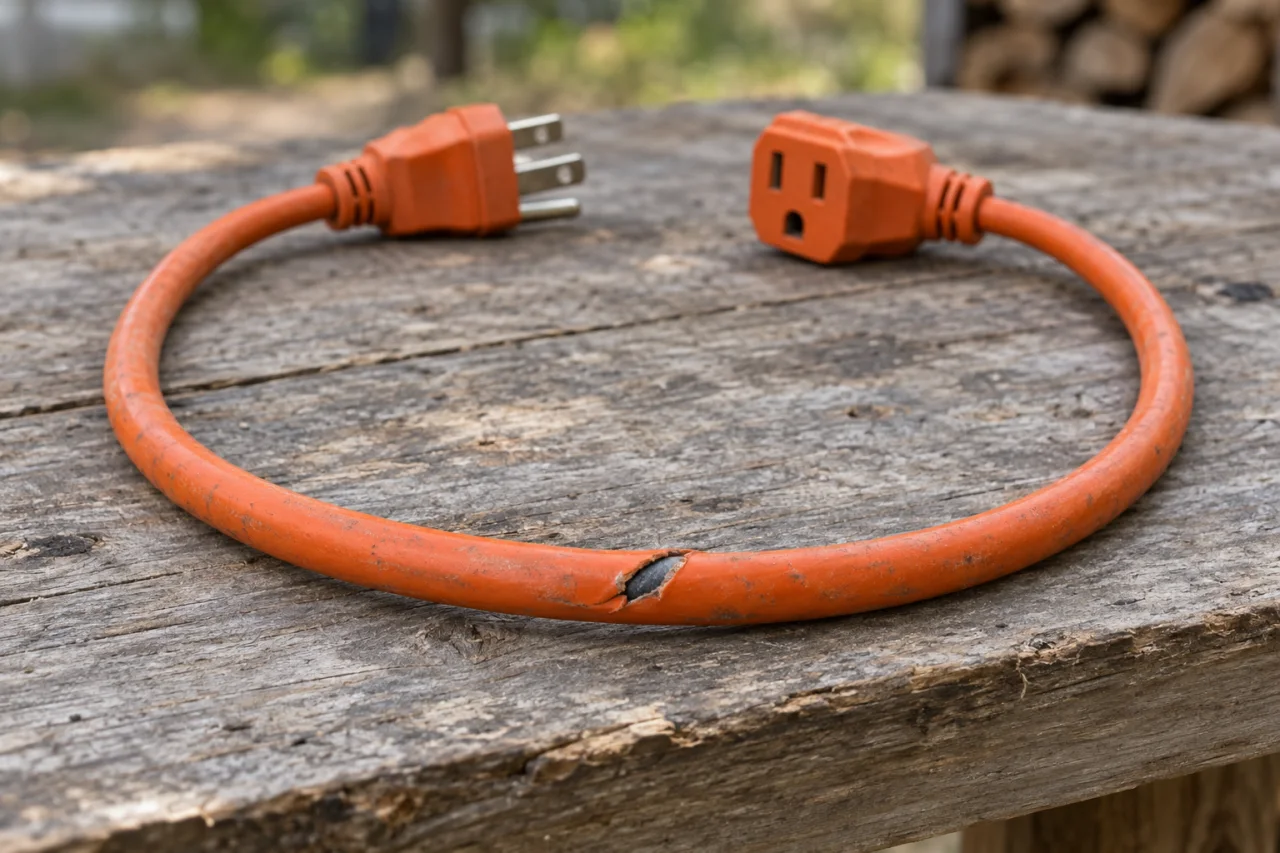
Never backfeed house wiring through a wall outlet. Do not use damaged cords or handle electrical equipment while standing in water.
Prepare for an assessment with useful questions
Before arranging help, gather the equipment identification, manual, operating-hour record, service history and exact symptoms. Explain whether the concern is scheduled maintenance, starting failure, a returning alarm or loss of power to expected circuits. Ask what the proposed work includes rather than treating every generator visit as equivalent.
The Electric Knight lists Generators among its electrical services for West End and Moore County homes and businesses. Discuss what you have observed, ask whether the equipment and concern fit the available scope, and review proposed work before proceeding. Confirm any need for separate manufacturer-authorized or fuel-system service.
The goal is a clearer readiness picture: documented maintenance, understood limitations and unresolved problems addressed by the appropriate provider—not confidence based only on the sound of a running engine.
- Does the proposed scope cover engine service, electrical equipment, transfer operation or only selected items?
- Is manufacturer-authorized service needed for this model, fault or warranty-related work?
- How will any proposed functional evaluation be performed safely, and what will it establish?
- What condition, access, parts or equipment requirements could change the scope?
- What written findings and next-due information will be provided?
Questions & answers
Does a successful exercise cycle mean the generator will power my home?
Not necessarily. Some standby exercise programs run without transferring household loads. They provide limited evidence of operation, not proof of transfer-switch performance or the ability to carry the intended loads.
How often should generator oil and filters be changed?
Use the maintenance schedule for the exact model. Requirements can depend on elapsed time, operating hours, initial break-in and operating conditions. Apply whichever time or hour limit the manual specifies first.
Should I reset a generator fault before calling?
Record the complete message first and consult the model-specific instructions. Clearing a message does not correct its cause. If the cause is unclear, the fault returns or the generator will not start, seek qualified service rather than repeatedly resetting it.
Can fuel stabilizer fix gasoline left in storage?
Stabilizer does not restore gasoline that has already deteriorated. Follow the generator’s fuel and storage instructions; difficult starting after storage may require fuel-system service.
What if a portable generator shuts down because of its CO sensor?
Do not bypass the sensor or repeatedly restart the generator in the same position. Follow the manufacturer’s instructions. If a household CO alarm sounds or poisoning is suspected, get everyone outside immediately and call 911.
Sources & further reading
- Generac: Where Can I Find the Maintenance Schedule for My Generac Home Standby Generator?
Model-specific maintenance schedules, calendar and runtime intervals, break-in requirements, continuous-operation maintenance and differences among engine designs.
- Generac: Owner’s Manual for 60 Hz Air-Cooled Generators, 10–24 kW
For the covered air-cooled models, exercise does not transfer loads unless utility power is lost; transfer-system troubleshooting can require authorized service; manual transfer presents electrocution hazards.
- Cummins: Small Business Standby Generator Maintenance
Following the operator’s periodic maintenance schedule, automatic-start hazards during maintenance and inspection, and the need for qualified technical advice.
- Generac: How Do I Clear an Error or Alarm Code On My Home Standby Generator?
Differences among maintenance reminders, warnings and alarms; controller-specific instructions; hours of protection versus fault information; seeking authorized service for returning alarms and avoiding repeated clearing without correcting the cause.
- Honda: EU Generator Fuel Recommendations
Gasoline deterioration can cause starting and running problems; stabilizer cannot restore stale fuel; storage preparation depends on the model and storage duration.
- CPSC: Portable Generator and CO Safety Tips
Portable-generator outdoor placement at least 20 feet from the house, exhaust direction, CO alarms, limits of CO shutoff features, and immediate evacuation followed by calling 911 for a CO alarm or suspected poisoning.
- CPSC Safety Alert: Portable Generator Hazards
Cooling before refueling, fuel storage outside living areas, inspecting extension cords for damage, avoiding wet electrical handling and never backfeeding a wall outlet.
- CDC: Carbon Monoxide Poisoning Basics
CO poisoning symptoms, outdoor generator operation more than 20 feet from doors, windows and vents, prohibition on indoor or garage operation, and battery-powered or backup CO detection.
- www.watchhillfire.com
Guidance referenced in this article on Generator Readiness: Maintenance Records, Warning Signs and Safe Limits.
- www.cdc.gov
Guidance referenced in this article on Generator Readiness: Maintenance Records, Warning Signs and Safe Limits.
Prepared and automatically checked on . Conditions, costs and requirements can change. Ask about the details that apply to your situation.
Continue reading
Helpful next reads
Portable or Standby Generator? Compare the Practical Tradeoffs
The right generator is the one that fits your essential loads, property and ability to operate it safely. Compare three arrangements, from appliance-only portable backup to automatic standby.
A Moore County Storm-Outage Plan for Essential Power Needs
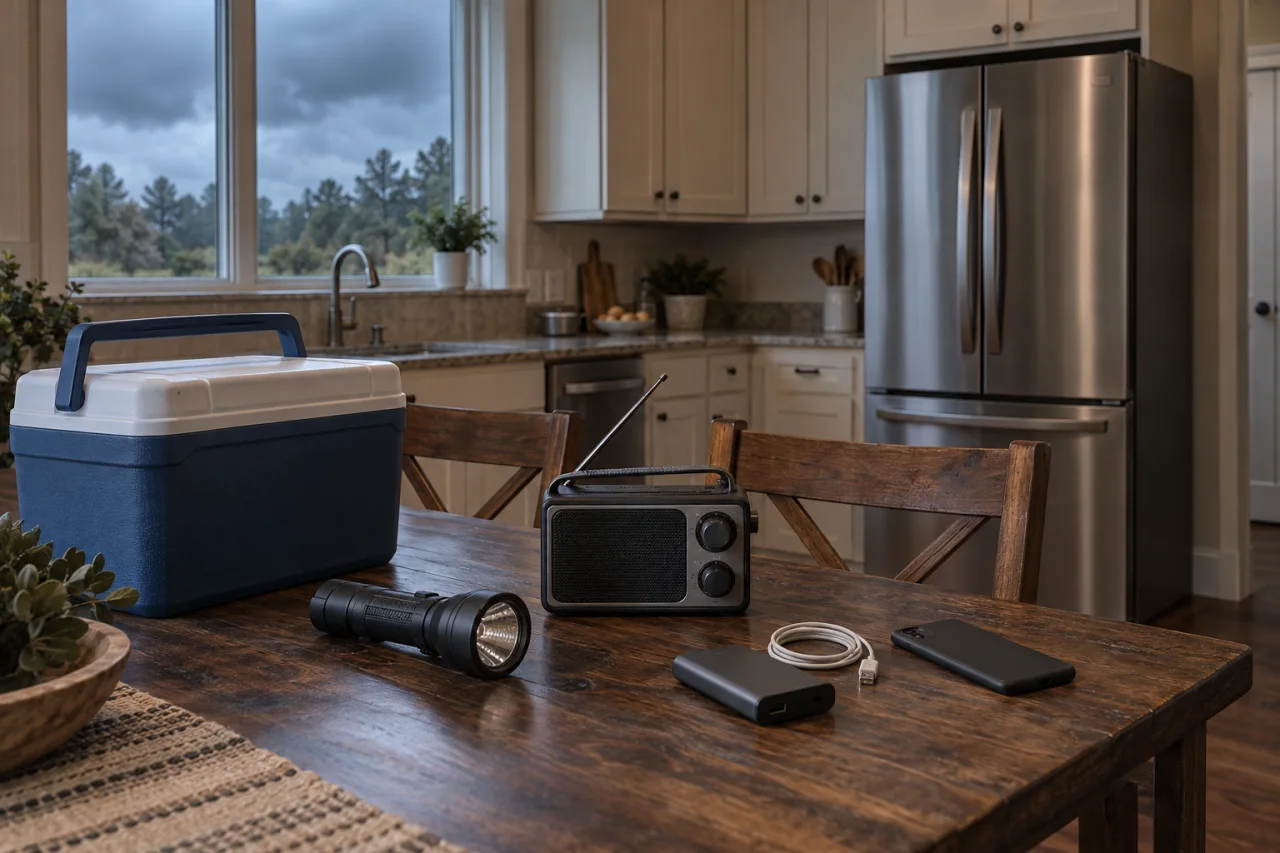
Build a household outage plan around essential needs, safe generator operation and practical alternatives—not assumptions about when power will return.